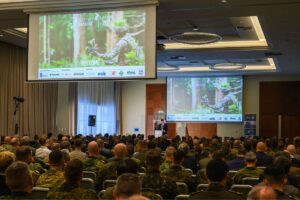
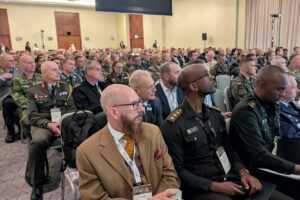
NATO Allies are testing how quickly they can share battlefield information during a new British-led exercise in Dorset. Exercise Accelerator 2.0 brings together more than 300 soldiers, engineers, coders and defence technology firms for a ten-day operation, as per a recent press statement.
The exercise tackles one of NATO’s most pressing challenges: ensuring forces from different nations can connect and fight as a single, coordinated force.
Testing Connected Systems
The British Army leads the exercise alongside NATO Allied Land Command and US Army Europe and Africa. Participants will trial how Allied forces link sensors, command systems and AI-enabled decision-support tools through shared data architectures and secure networks. The aim is faster information-sharing and sharper decision-making, strengthening NATO’s ability to deter and respond to emerging threats.
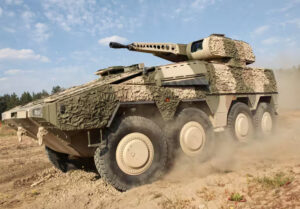
Accelerator 2.0 will also demonstrate the role of the Ajax armoured vehicle within the Army’s digital fighting system. The platform helps troops detect, understand and share battlefield information rapidly across UK and Allied forces, supporting quicker, better-informed action.
Shaping Future Capability
The exercise will generate practical evidence on which technologies can be deployed, scaled or developed further, enhancing Army lethality and reinforcing NATO deterrence.
Chief of the General Staff General Sir Roly Walker commented: “NATO succeeds when we combine the ingenuity of industry, the expertise of our militaries and the resolve of our nations. Exercise Accelerator 2.0 does exactly that, bringing Allies together to accelerate innovation, sharpen our warfighting edge and reinforce NATO’s deterrence.”
He added: “In an era of constant adaptation, our greatest advantage will be our ability to learn and evolve faster than any adversary.”
Findings from Accelerator 2.0 are expected to inform Army modernisation, ensuring the Armed Forces stay prepared for future threats.
Learn more on the British Army website