Image: Danish MoD
Denmark has taken a significant step toward establishing a permanent ground-based air defence capability, signing its first contract for a long-term system as part of a broader effort to strengthen national and allied air security.
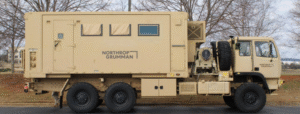
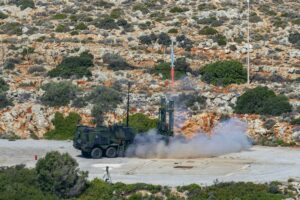
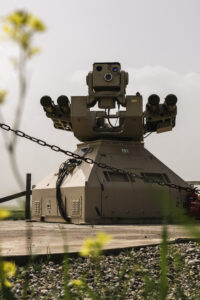
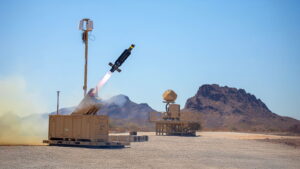
The Danish Ministry of Defence’s Materiel and Procurement Agency (FMI) has concluded an agreement with Norwegian defence firm Kongsberg Defence and Aerospace (KDA) for the delivery of a number of NASAMS (National Advanced Surface-to-Air Missile System) units, according to the agency. The deal marks the transition from an interim solution to a permanent air defence architecture for Denmark.
From interim capability to permanent solution
The newly signed contract builds on a previous arrangement between FMI and KDA. In July 2025, Denmark entered into a temporary leasing agreement for a used NASAMS system to rapidly restore a ground-based air defence capability. That stopgap measure was intended to address immediate operational requirements while a long-term solution was prepared.
Under the new agreement, NASAMS will become a permanent element of Denmark’s ground-based air defence, replacing the leased system and forming the foundation of a sustained national capability. FMI has not disclosed the number of systems ordered or the contract value.
“Today we have reached an important milestone for Danish ground-based air defence,” said Jan Toft, programme director for ground-based air defence at FMI. “I am very pleased that we are looking forward to a permanent solution with a system that can meet Denmark’s operational needs,” he added, according to FMI.
Strengthening national and allied defence
Denmark previously retired its Hawk surface-to-air missile systems in the early 2000s, leaving a long-standing gap in ground-based air defence. The renewed focus on air defence reflects a broader shift among NATO members in response to a more contested European security environment and the growing prominence of air and missile threats.
NASAMS is widely deployed across NATO and partner nations and is designed to counter a range of aerial threats, including aircraft, helicopters, unmanned aerial vehicles and cruise missiles. The system uses networked sensors and launchers and can employ various missile types, including the AIM-120 AMRAAM.
For Denmark, the choice of NASAMS offers both interoperability with allies and a proven, in-service solution. The system is already operated by several European countries, as well as the United States, where it is used to protect high-value assets and critical infrastructure.
Industrial and regional dimensions
Kongsberg Defence and Aerospace, a key supplier within the Nordic defence industrial base, has seen strong demand for NASAMS in recent years. The Danish contract further reinforces defence cooperation between Nordic countries, which has intensified as regional security concerns have grown.
While FMI has not released a delivery schedule, the contract represents the first formal step in building Denmark’s permanent ground-based air defence structure. Additional contracts and phases are expected to follow as the capability is expanded and integrated into the wider Danish Armed Forces and NATO air defence framework.
According to the Danish Ministry of Defence’s Materiel and Procurement Agency, the agreement underscores Denmark’s commitment to restoring a critical military capability and ensuring that its airspace can be defended in close coordination with allies.
Source: Danish MoD