Image: Lockheed Martin
The Javelin Joint Venture has completed a sweeping overhaul of its missile supply chain, laying the groundwork for significantly higher output as global demand for the weapon grows.
Lockheed Martin and Raytheon, partners in the Javelin Joint Venture (JJV), spent the past year coordinating upgrades, risk investments and capacity expansions across a network of nearly 100 part-level suppliers and 25 major subcontractors, according to Lockheed Martin.
Suppliers Hit Key Engineering Milestone
The centrepiece of the ramp effort was the completion of non-recurring engineering (NRE) work across the supply base. Suppliers added tooling, test equipment and, in several cases, additional floor space. Each company spent eight to ten months completing the required updates, a timeline that gave the broader programme room to acquire resources and prepare for increased output.
Rich Liccion, JJV vice president and Lockheed Martin Javelin programme director, credited early supplier engagement as decisive. “By investing strategically in capacity, we’ve been able to increase production while maintaining the quality standards our global customers expect,” he said. “This coordinated approach gives us confidence the Javelin supply chain can sustain the accelerated production tempo.”
The full production ramp is on track to begin later this year.
AI Tools Shift Supply Forecasting From Reactive to Collaborative
Managing supply chain pressure across such a broad industrial base carries real risk. Many Javelin suppliers simultaneously support other high-volume defence programmes, intensifying competition for materials and manufacturing capacity.
To address this, the JJV rolled out AI-driven forecasting tools giving key suppliers real-time visibility into the programme’s demand profile. The change reframes the supplier relationship, moving it away from reactive order management and toward a shared, forward-looking demand horizon.
Jenna Hunt Frazier, JJV president and Javelin programme director at Raytheon, said technology adoption is central to sustaining that growth. “By adopting advanced technologies like automation and AI-driven forecasting, we’re enhancing efficiency and building a resilient, future-ready supply chain to support mission success,” she said.
Capital unlocked by the ramp is also being directed into staging facilities and refined production line layouts, changes the team says will lift throughput and improve yield over time.
Dual Sourcing and Stockpiling Target Long-Term Resilience
Further down the road, the JJV is pursuing structural changes to harden its supply base against disruption. Qualifying second sources for higher-risk components tops the list, a direct hedge against single-point failures triggered by export restrictions or raw material scarcity.
The team is also working to keep lead times under 52 weeks for all critical parts, while maintaining on-hand stock of high-value and energetic items. Those buffers provide breathing room when supplier capacity tightens unexpectedly.
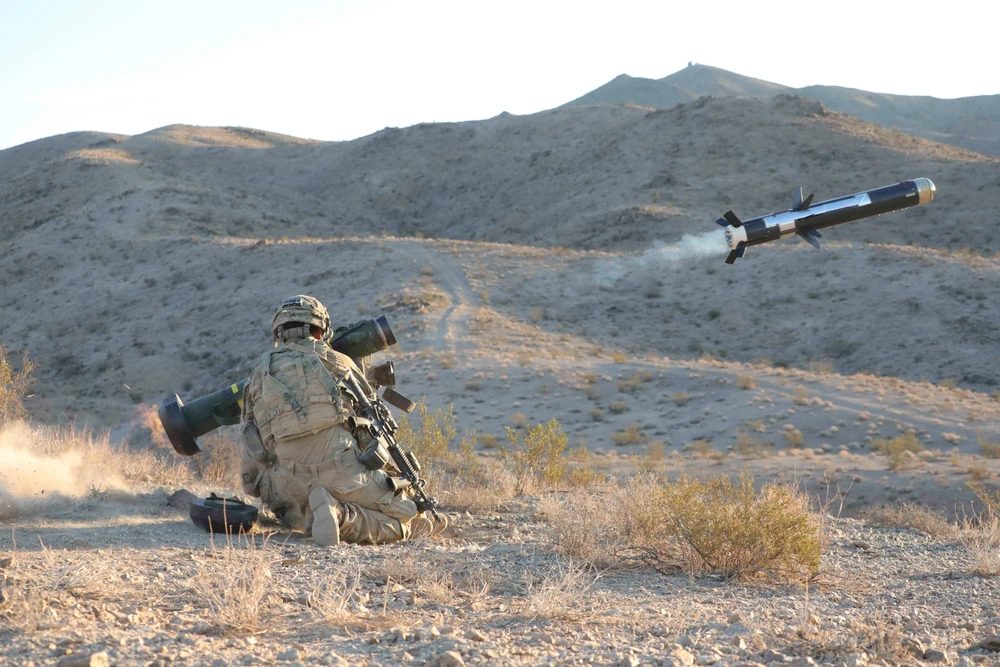
The approach reflects hard lessons from the sharp spike in guided munitions demand that followed Russia’s full-scale invasion of Ukraine in 2022. The Javelin, a man-portable anti-tank missile, became one of the most visible symbols of Western military aid to Kyiv, quickly exposing the constraints of peacetime production rates across the defence industrial base.
A Blueprint for Scaling Under Pressure
The JJV says its restructured supply base can now absorb global demand spikes, accommodate future Javelin variants and sustain high-tempo production without compromising quality or delivery schedules.
The programme’s trajectory offers a wider lesson for the defence sector: proactive supplier investment and early coordination, rather than reactive scrambling, are what allow industrial bases to scale at the pace modern conflict demands. With the ramp now firmly underway, Lockheed Martin says it will hit its increased production rate before the year is out.
Source: Lockheed Martin