Image: Anduril Industries
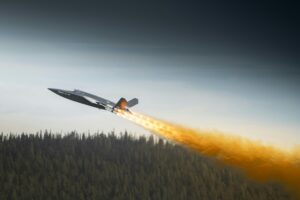
The autonomous wingman aircraft completed its first operator-led flight exercises just six months after maiden flight, marking a pivotal step toward front-line deployment.
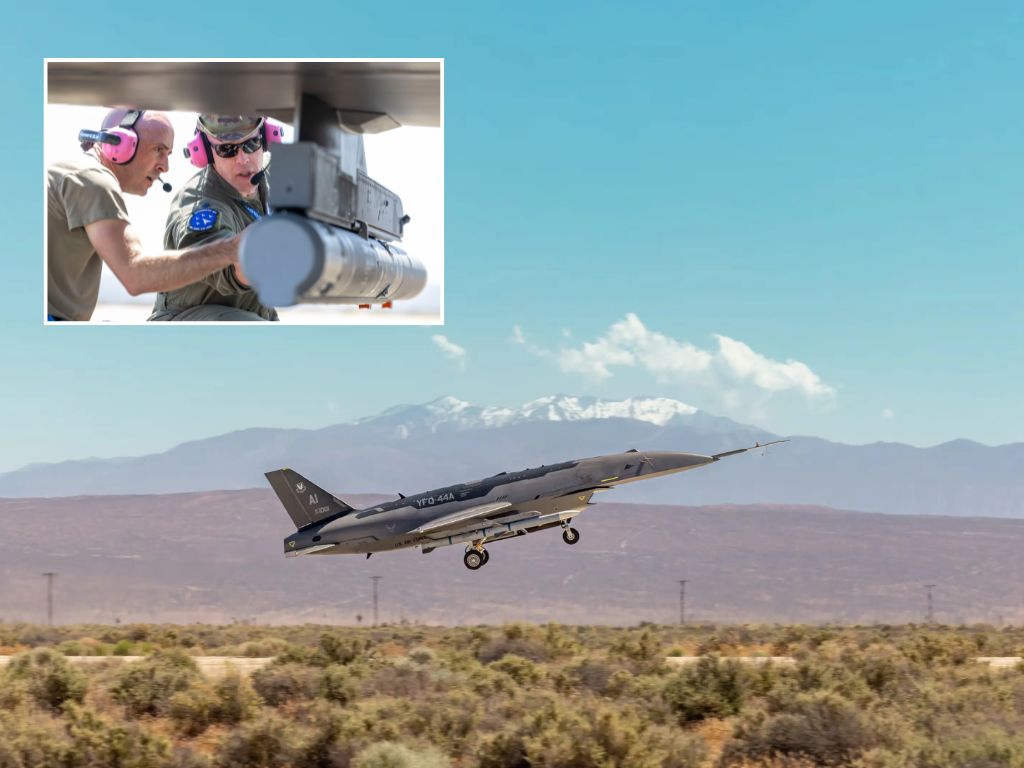
The U.S. Air Force has begun live experimental testing of Anduril Industries’ YFQ-44A autonomous combat aircraft, integrating the drone directly with its Experimental Operations Unit (EOU) during exercises at Edwards Air Force Base in California. The exercise marks a significant milestone in the service’s push to field a credible Collaborative Combat Aircraft (CCA) capability by the end of the decade.
Operators Take the Controls
Air Force personnel ran end-to-end YFQ-44A flight operations throughout the exercise. Crews launched, recovered, and turned the aircraft daily without Anduril support in core operational tasks. EOU operators assumed responsibility for pre- and post-flight checks, weapons loading, and direct aircraft tasking during taxi and flight, duties previously handled by the manufacturer’s own staff.
The exercise validated one of the programme’s foundational design philosophies: build the aircraft to be simple to operate and sustain. A small team of EOU maintainers, with only days of training, successfully sustained a high-tempo sortie schedule. That manpower footprint represents a fraction of what traditional unmanned aerial systems require. According to Anduril, the seamless handover from company personnel to Air Force operators validates some of the programme’s earliest design decisions.
Autonomy as the Foundation
Central to the YFQ-44A’s rapid development has been a deliberate decision to front-load autonomy. Every taxi and flight test conducted since the programme’s inception has been semi-autonomous, a choice Anduril made to accelerate long-term progress, even at the cost of some early milestones.
The payoff has been considerable. The EOU began experimental testing just six months after the YFQ-44A’s first semi-autonomous flight and less than two years after prototype contract award. That pace is exceptional by any modern defence procurement standard, outrunning major fighter development timelines by decades.
Minimal Footprint, Maximum Flexibility
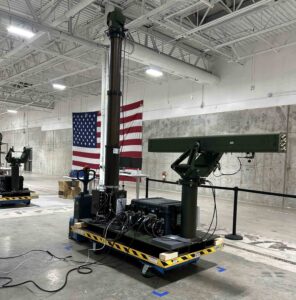
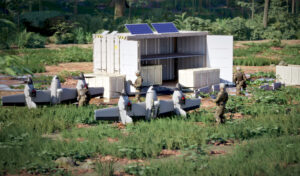
Anduril’s Menace-T command, control, communications, and compute (C4) system served as the ground element for all flight operations during the exercise. Using a ruggedised laptop, EOU operators uploaded mission plans, initiated autonomous taxi and takeoff, tasked the aircraft in-flight, and managed post-flight data. The entire ground control solution fits within two Pelican cases, enabling the team to simulate operations from a forward operating base without fixed infrastructure.
That capability directly supports the Air Force’s Agile Combat Employment (ACE) concept, a doctrine built around dispersing aircraft and personnel across multiple small, flexible locations to improve survivability in contested environments. CCAs operating under ACE must sustain combat operations with limited logistics and manpower. The YFQ-44A’s design was engineered around exactly these constraints.
Building Doctrine Alongside Hardware
The EOU’s role extends beyond testing aircraft performance. The unit is developing the doctrine, tactics, and workflows that will govern how CCAs are deployed, sustained, and integrated into broader combat operations. Every sortie flown contributes data that will shape future concepts of operation.
High operational tempo during the exercise provided early insight into the logistics footprint necessary to sustain regular flying. Those lessons will feed directly into both future exercises and ongoing development of the aircraft itself. The YFQ-44A subsequently returned to Anduril’s Southern California test site following the conclusion of the exercise.
A Credible Capability, Not Just a Prototype
The CCA programme’s ambition is explicit: to place a combat-ready autonomous wingman on the ramp before 2030, not to produce a technology demonstrator. With the YFQ-44A now operating under Air Force command at realistic tempo, the programme has moved materially closer to that goal. Future exercises will continue evaluating the aircraft’s performance within the ACE framework, providing the Air Force with the data required to refine CCA doctrine and operational workflows ahead of potential front-line deployment.
Source: Anduril Industries Press Release