British military medics have tested a field hospital designed to stay hidden from the enemy, applying lessons from the war in Ukraine to keep lifesaving care running under threat.
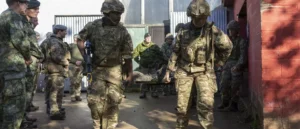
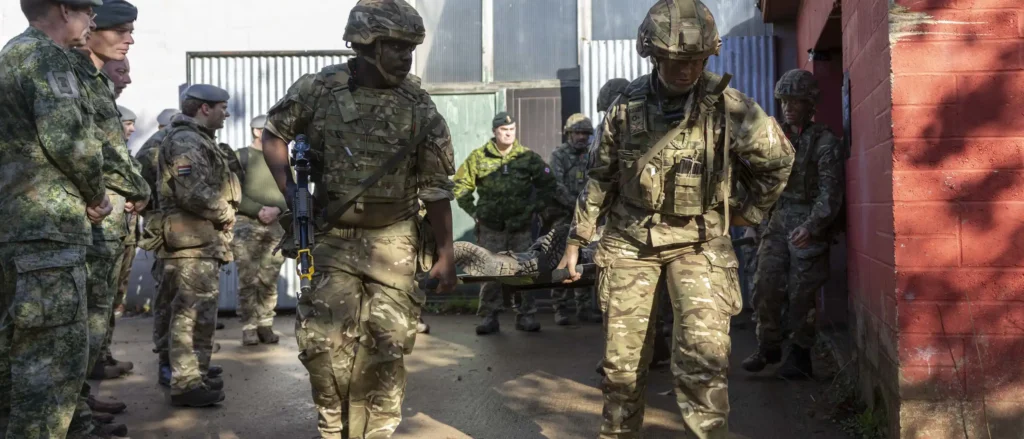
The Army’s 2 Medical Group led Exercise Bellatorean Cyclone on Salisbury Plain Training Area in Wiltshire, according to the Royal Army Medical Services. More than 200 specialists from 206 Multirole Medical Regiment and 335 Medical Evacuation Regiment took part. Their aim was to build hospital and mobile surgical capabilities that work across several concealed locations rather than from one large site.
Splitting the hospital
Senior figures from NATO’s Committee of the Chiefs of Military Medical Services (COMEDS) watched the trial. They included Vice-Chair Major General Marc Ongena of the Belgian Armed Forces. He saw how UK teams cut the physical and electronic signatures that could give away a hospital’s position.
The approach, known as MESH, divides a large field hospital into smaller teams. Each works from a separate site, including existing buildings and damaged urban infrastructure. That makes the facility harder to detect, while the teams still receive, treat and stabilise casualties.
Lessons from Ukraine
The war in Ukraine has exposed how vulnerable medical facilities are to drones, artillery and surveillance. Attacks can also delay evacuation, which makes surgery close to the front line vital.
The exercise tested advanced resuscitation, damage control surgery and short-term treatment before casualties move on. Teams also practised keeping treatment and communications running across separate locations. Personnel trialled a mobile surgical team that can reinforce overwhelmed facilities quickly with limited extra logistical support.
UK Surgeon General Major General Phil Carter, the UK representative to NATO COMEDS, attended. He said 2 Medical Group is helping lead the discussion on what deployed hospital care must look like on the modern battlefield: innovative, dispersed, resilient and connected.
Staff Sergeant Diane King, a critical care nurse with 206 Multirole Medical Regiment, said working as a team in an unfamiliar environment helped refine procedures based on current conflicts. Staff Sergeant Ollie Hobbs, a paramedic with 335 Medical Evacuation Regiment, said the improvised vehicle platforms were exciting to work on.
The findings will help 2 Medical Group build more resilient capabilities and shape cooperation with NATO allies preparing to support each other on operations.
Learn more on the British Army website