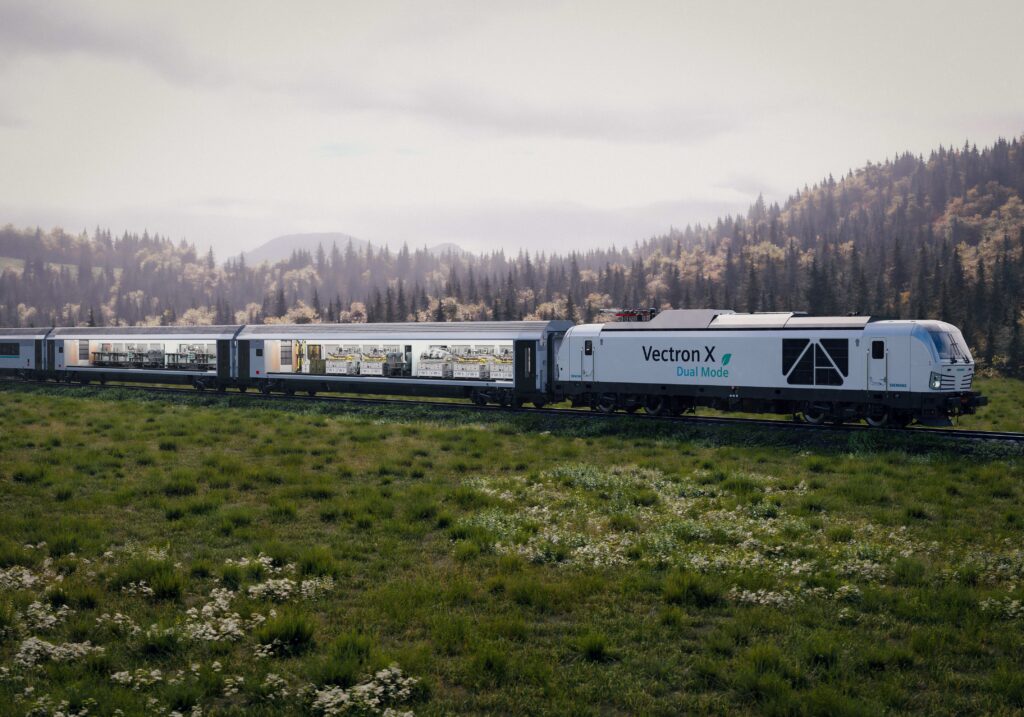
Siemens Mobility and Lufthansa Technik Defense are developing a rail-based patient transport system for military medical evacuations and civilian disaster response, according to a joint announcement. The companies signed a memorandum of understanding ahead of the Berlin Security Conference. The train will carry more than 150 patients, including intensive care cases.
Designed for German forces and NATO allies
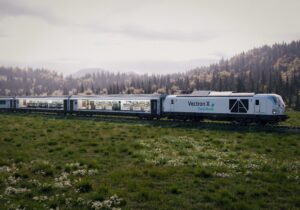
The partners plan to build the train in Germany for the German Armed Forces and their NATO allies. Siemens will supply its Vectouro passenger coaches, paired with a Vectron X or Vectron X Dual Mode locomotive. Lufthansa Technik Defense will fit the coaches with medical equipment, from basic litter racks to full intensive care beds known as Patient Transport Units. Up to 90 medical and support staff can travel on board.
Steffen Bobsien, Head of Locomotives and Coaches at Siemens Mobility, said the concept combines modern medical care with the advantages of rail transport.
Aeromedical technology moves to rail
Armed forces have used Lufthansa Technik’s aeromedical systems for decades. The technology converts the Bundeswehr’s A400M into a “flying intensive care unit”. The same standardised systems will go on the train, so patients stay in one bed when they switch between transport modes. Operators can reconfigure coaches for missions from basic treatment to intensive care, covering NATO categories D1 to D4.
Michael von Puttkamer, Vice President of Special Aircraft Services and Defense at Lufthansa Technik, said medical evacuation carries high strategic importance amid geopolitical uncertainty. He said the partnership creates an end-to-end medical supply chain and strengthens operational readiness.
Cross-border reach and long service life
Both the locomotives and coaches suit cross-border operations. The coaches’ pressure-tight construction allows travel on high-speed routes, so the train can cross European borders without changing vehicles. The Dual Mode locomotive runs on electric or diesel power, which keeps the train moving on non-electrified lines or after an overhead line failure.
Operators can also convert the coaches to civilian passenger service. This improves vehicle use and lowers life-cycle costs. The trains are designed for more than 30 years of service and can be upgraded during that time.
Learn more on the Siemens website