Image: British Army
British and French airborne forces have conducted a large-scale joint deployment in France, rehearsing a rapid intervention mission designed to support a threatened ally facing insurgency and external aggression.
The nine-day exercise, Orion, brought together around 2,000 troops from the UK’s 16 Air Assault Brigade and France’s 11e Brigade Parachutiste, according to the UK Ministry of Defence. The drills tested the two nations’ ability to plan, deploy and fight as a single force under demanding operational conditions.
The scenario focused on a simulated NATO crisis response mission, reflecting the type of operation the combined force could be tasked to deliver in Europe’s current security environment, according to UK defence officials.
A standing Franco-British rapid reaction force
The two brigades operate together as the Airborne Combined Joint Force (A-CJF), a standing formation created in 2013 to provide a deployable Franco-British rapid reaction capability. Both units serve as their armies’ primary airborne and crisis-response formations.
Exercise Orion began with a formal alert phase. British planning officers deployed from Colchester to Orléans-Bricy airbase near Paris, where they established a joint headquarters with French counterparts. From there, the combined staff planned a complex airborne entry operation.
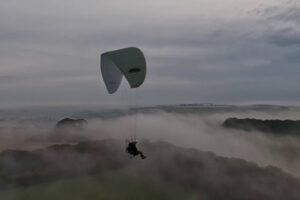
Reconnaissance elements moved first. British Pathfinders and French Groupe Commando Parachutiste teams conducted free-fall insertions into the Saint-Cyr-Coëtquidan training area in Brittany. They simulated the destruction of enemy air defences and marked drop zones for the main assault force.
Major Dan Lauder of 16 Air Assault Brigade said the scenario reflected realistic operational demands. “The more we train together, the more ready we are to operate together,” he said, according to the MoD.
Multinational airborne insertion
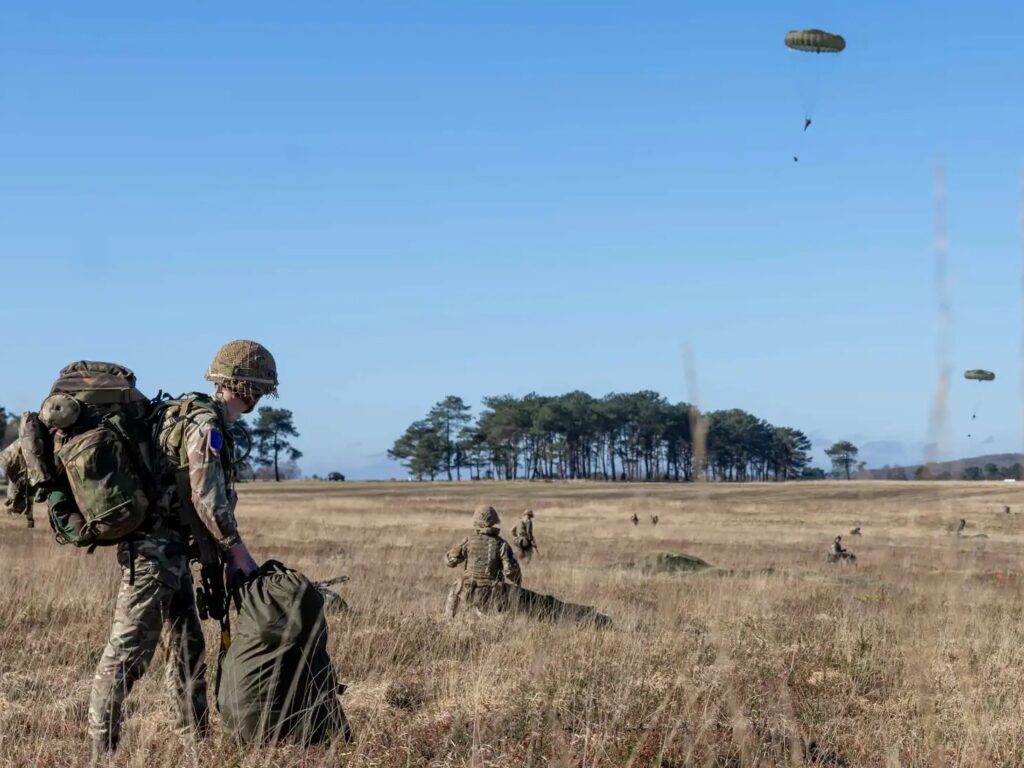
The main airborne phase involved a coordinated multinational drop. Paratroopers from 2nd Battalion The Parachute Regiment deployed from RAF Brize Norton aboard A400M Atlas transport aircraft. French battlegroups and the A-CJF headquarters element lifted from Orléans-Bricy.
An Italian platoon from the Brigata Paracadutisti Folgore also joined the insertion, marking the first participation of Italian airborne forces in an A-CJF exercise.
Aircraft crews delivered vehicles, equipment and around 18 tonnes of rations, ammunition and stores by parachute, sustaining the force immediately after landing. Once on the ground, units dispersed across the training area to engage simulated insurgent elements and establish defensive positions along a notional invasion route.
Commander General Renaud Rondet of 11e Brigade Parachutiste said the deployment demonstrated the A-CJF’s role as an “initial entry force, ready to fight in the most extreme conditions and complex environments,” according to the French Army.
Interoperability, technology and European security
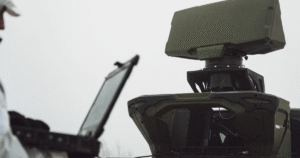
French commanders said the exercise also tested new operational structures, hybrid communications networks and drone integration. These capabilities reflect the growing importance of digital connectivity and unmanned systems in modern airborne operations.
Royal Air Force crews highlighted the role of strategic airlift in sustaining the force. Squadron Leader Luke, lead pilot on the exercise, said A400M crews delivered “long-range, precision air mobility at pace,” moving troops and supplies exactly where required, according to RAF statements.
The A-CJF forms part of wider Franco-British defence cooperation established under the 2010 Lancaster House Treaties, updated in 2025. Defence officials view the formation as a key instrument of European rapid response capability, particularly in support of allied security commitments under NATO.
According to the UK Ministry of Defence, Exercise Orion underlined the ability of British and French airborne forces to deploy together at short notice, reinforcing Europe’s capacity to respond to crises through integrated, multinational military action.
Source: British Army News