Image: IDF Spokesperson’s Unit photographer
Taiwan has announced plans to construct a comprehensive, dome-like air defence network designed to protect the island from “hostile threats,” President William Lai confirmed during National Day celebrations on Friday. The declaration follows Taipei’s latest warning that China is rapidly enhancing its military capabilities to threaten the self-governed island.
Lai refrained from naming China directly, but the message was clear. Beijing regards Taiwan as part of its territory and has not ruled out the use of force to bring it under control. In recent years, Chinese aircraft and naval vessels have conducted increasingly frequent incursions around Taiwan, often simulating invasion scenarios.
Expanding Defence Capabilities
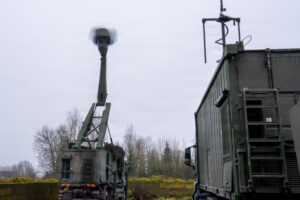
According to Reuters news agency, unnamed sources familiar with the plan said the system—dubbed the “Taiwan Dome” or “T-Dome”—will be modelled in part after Israel’s Iron Dome, an integrated air defence network capable of intercepting rockets and missiles under a variety of conditions.
Lai described the T-Dome as featuring “multi-layered defence, high-level detection, and effective interception” technologies that would “weave a safety net” over the island. The goal, he said, is to safeguard civilians from the full spectrum of aerial and missile threats.
The initiative comes as Taiwan increases its defence budget, which is set to rise to more than 3% of gross domestic product next year and could reach 5% by 2030. Such an expansion would mark one of the highest defence spending levels among U.S. partners in the Asia-Pacific.
However, the president faces significant political headwinds. Taiwan’s opposition-controlled legislature has already blocked several major defence appropriations this year, reflecting sharp divisions over how to respond to China’s growing military pressure.
Beijing Condemns Move
China’s foreign ministry swiftly denounced Lai’s comments, accusing him of “distorting facts” and “misleading public opinion.” Spokesperson Guo Jiakun labelled Lai a “troublemaker” and reiterated Beijing’s position that Taiwan remains an inseparable part of Chinese territory.
Beijing routinely opposes any steps that strengthen Taiwan’s military self-sufficiency, viewing such moves as steps toward formal independence.
Challenges and Strategic Implications
Defence analysts caution that building a system comparable to Israel’s Iron Dome will be technically and financially demanding. “If the system is modelled after Israel’s, it will require a massive budget. It won’t be easy,” said Hung-Jen Wang, a political scientist at National Cheng Kung University, in comments reported by Reuters.
Dennis Weng of Sam Houston State University added that constructing the T-Dome is likely to take longer than Lai’s presidential term, describing the announcement as “partly symbolic” and intended to signal resolve—particularly to Washington.
The United States, Taiwan’s principal security partner, is legally obliged under the Taiwan Relations Act to provide defensive arms to the island. Successive U.S. administrations have urged Taipei to invest more in its own deterrence capabilities as China’s military buildup accelerates.
Call for Restraint
In his National Day address, Lai urged Beijing to “demonstrate the responsibility befitting a major power” by renouncing the use of force in the Taiwan Strait. “We should learn from the suffering of war and ensure that the tragedies of history are never repeated,” he said.
Lai, who Beijing brands a “separatist,” has taken a firmer line on national defence than his predecessor Tsai Ing-wen. In July, Taiwan conducted its largest-ever annual military exercise, aimed at improving civil defence readiness and showcasing the island’s capacity to withstand a potential blockade or invasion.
The T-Dome initiative underscores Lai’s push to strengthen Taiwan’s deterrence posture in an increasingly volatile regional security environment.
Source: BBC News