Image: General Dynamics Land Systems
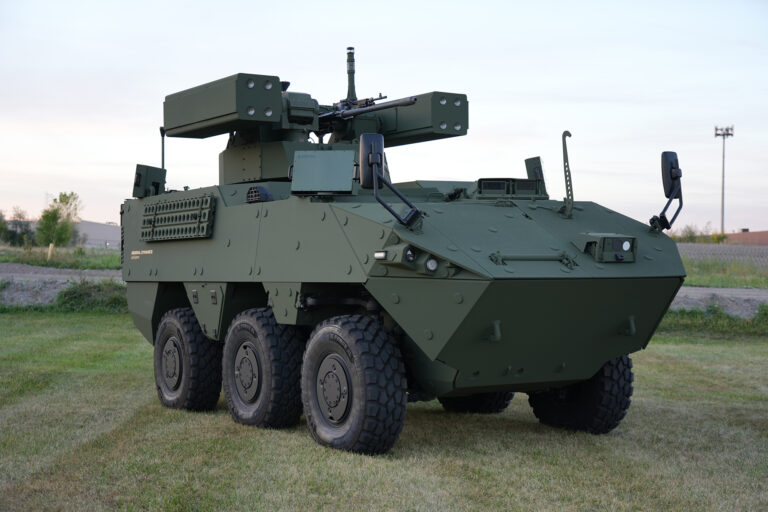
Anduril Industries has partnered with General Dynamics Land Systems (GDLS) to integrate Anduril’s Spark radar technology into U.S. and allied ground combat platforms, in a move aimed at enhancing battlefield survivability through networked, layered defense systems, according to Anduril.
The collaboration seeks to address one of modern warfare’s most pressing challenges: the growing vulnerability of maneuvering ground forces to fast-evolving aerial and missile threats such as loitering munitions, attack drones, and precision-guided rockets.
A Networked Shield for the Modern Battlefield
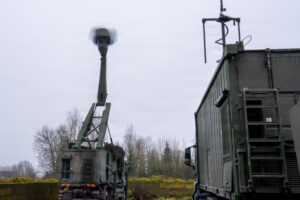
Anduril’s Spark radar is designed to detect and track both air and ground threats at extended ranges with high-speed processing and signal clarity. The radar operates within Anduril’s broader Lattice platform — a software-defined battle management system that links sensors, radars, and command nodes into a unified defensive network.
By integrating Spark into GDLS armored vehicles and battlefield networks, the partnership aims to provide what Anduril calls “formation-based protection.” Instead of relying on each platform’s self-contained defensive systems, units will share targeting data and threat alerts across formations, allowing for faster, coordinated responses to multi-domain attacks.
Deep Integration from the Ground Up
General Dynamics Land Systems, a leading global manufacturer of tracked and wheeled combat vehicles including the Abrams main battle tank and Stryker armored vehicle, brings decades of expertise in vehicle design and integration. Under the new agreement, GDLS will incorporate Spark radar into future vehicle architectures from the design stage rather than as an after-market addition.
This approach, the companies said, will deliver tighter system integration, improved performance, and a scalable model for fleet-wide protection. The first phase will focus on armored vehicles before expanding the technology to command posts, missile launchers, and other mobile elements.
Evolving Ground Warfare
The partnership reflects a broader shift in land warfare toward distributed, networked defenses capable of countering increasingly autonomous and high-speed threats. Recent conflicts, particularly in Ukraine and the Middle East, have underscored the vulnerability of ground assets to drone swarms and precision strikes that often outpace traditional detection systems.
By combining Anduril’s software-driven sensors and battle management technology with GDLS’s vehicle engineering, both firms aim to close that gap — delivering real-time situational awareness and layered protection for maneuver forces.
Toward a System-of-Systems Future
Anduril and GDLS describe the effort as a deliberate move away from platform-centric survivability toward a “system of systems” approach — one where vehicles, sensors, and command elements work in concert. The integration of Spark radar is expected to serve as a foundation for this next-generation, formation-level defense network.
“This partnership marks a commitment to ensuring ground forces can detect, track, and respond to threats faster and more effectively,” Anduril said in its announcement.
As militaries worldwide adapt to the realities of drone-saturated battlefields, the Anduril-GDLS collaboration represents a significant step toward modernizing ground force protection through digital integration and networked defense.