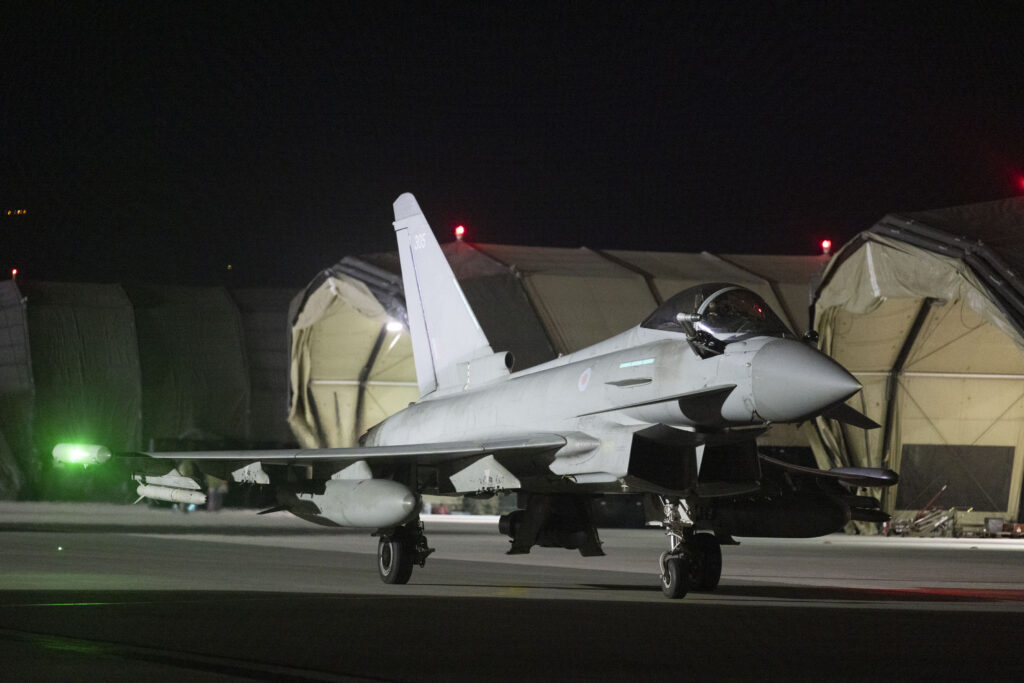
Image: UK MoD © Crown copyright 2026
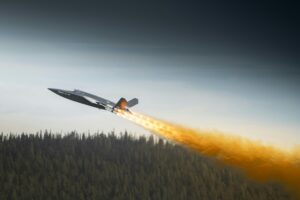
RAF Typhoon jets destroyed an uncrewed aerial system in Jordanian airspace and intercepted a second drone on course for Bahrain, the UK Ministry of Defence confirmed on 9 March 2026. The twin intercepts mark a sharp escalation in British air defence activity across the Middle East, with London now conducting defensive sorties in support of three regional partners simultaneously.
Twin Intercepts in One Night
The RAF acted on two separate threats within hours. One Typhoon crew engaged an uncrewed aerial system over Jordan, neutralising it before it could threaten ground targets. A second jet intercepted a drone tracking toward Bahrain and turned it back. Neither the origin nor the type of the drones was publicly disclosed.
The Gulf region has faced a sustained campaign of drone and missile attacks in recent years, largely attributed to Iran-aligned groups. British fast jets have previously conducted intercept operations in the area, but the simultaneous defence of two partner nations in a single night is operationally significant.
UAE Sorties and Expanded Air Operations
Separately, the UK has begun flying defensive air sorties in support of the United Arab Emirates. The MoD did not specify the number of sorties flown or aircraft involved, but the move signals a broadening of the UK’s protective mandate beyond Jordan and Bahrain.
To support these missions, London deployed additional air operations specialists to the Gulf. Their role is to maintain an accurate air picture across the region and assist partner nations with airspace management — a critical function as drone activity grows more complex and harder to attribute.
Helicopters Bolster Surveillance Capability
The UK has also reinforced its helicopter assets in the region. Additional Wildcat helicopters have arrived at British bases in Cyprus, positioned to support defensive operations across the eastern Mediterranean and into the Gulf. The Wildcat is a multi-role maritime and battlefield helicopter operated by both the Army Air Corps and the Royal Navy.
A Merlin helicopter has also arrived in theatre. The Merlin brings enhanced radar and sensor capability, strengthening the UK’s ability to detect, track, and respond to low-flying aerial threats. Its deployment suggests London is investing in persistent surveillance rather than relying solely on fast-jet patrols.
Broader Context
The deployments reflect a wider UK commitment to partner security in a region experiencing heightened aerial threat activity. Jordan, Bahrain, and the UAE are all longstanding British defence partners, with the UK maintaining a permanent military presence at RAF Akrotiri in Cyprus and at bases in Bahrain and Oman.
The pace of UK operational activity in the Gulf has increased markedly over the past 18 months as drone threats have grown more frequent. The latest announcement suggests London is moving toward a more structured, multi-layered defensive architecture — combining fast jets, helicopters, and ground-based air operations specialists.
Source: UK MoD X