Image: Lockheed Martin
Sikorsky and Robinson Helicopter Company have partnered to launch the R66 TURBINETRUCK, a purpose-built autonomous cargo helicopter targeting logistics gaps in both defence and commercial markets.
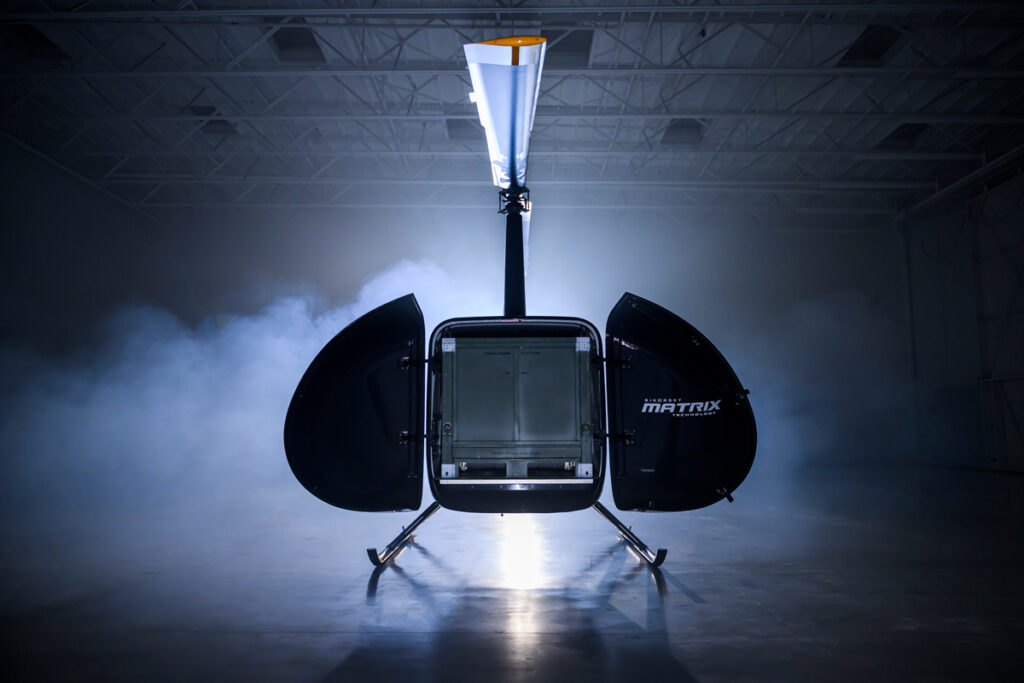
Sikorsky, a Lockheed Martin company, and Robinson Helicopter Company (RHC) revealed the R66 TURBINETRUCK at an industry event, marking a significant step in the expansion of autonomous rotary-wing systems. The aircraft combines Sikorsky’s established MATRIX™ autonomy suite with Robinson Unmanned’s new cargo UAS helicopter platform, according to Lockheed Martin.
A New Addition to the MATRIX Family
The R66 TURBINETRUCK becomes the 21st aircraft integrated with Sikorsky’s MATRIX system. The platform draws on capabilities developed for Sikorsky’s fully autonomous S-70UAS™ U-Hawk™. MATRIX has accumulated more than 1,000 flight hours across aircraft ranging from small drones to strategic airlift cargo planes.
Rich Benton, vice president and general manager of Sikorsky, framed the new aircraft as complementary to the U-Hawk. “We view the U-Hawk and R66 TURBINETRUCK as complementary bookends that meet emerging customer needs across defence and commercial segments,” Benton said.
Purpose-Built for Contested and Remote Environments
Designers stripped the R66 of its cockpit and crew stations entirely. In their place, the aircraft features a high-volume fuselage, a dedicated cargo floor, and a nose-mounted clamshell door for rapid palletised freight loading. The configuration targets remote-site resupply, contested logistics operations, and disaster relief scenarios — mission sets where reducing human exposure is operationally critical.
Both the TURBINETRUCK airframe and the MATRIX system use a modular open architecture. Operators can swap mission software and reconfigure the platform for varying requirements, giving military and civil customers flexibility across mission profiles.
Operator Interface and Autonomous Flight
Once loaded, an operator enters mission goals through a MATRIX tablet. The system then generates a flight plan autonomously, using onboard cameras, sensors, and algorithms to navigate to the target destination. The design philosophy mirrors that of the U-Hawk, prioritising repeatable and reliable autonomous performance with minimal operator burden.
David Smith, president and CEO of Robinson Helicopter Company, highlighted the long development history behind the platform. “We’ve taken years of flight-proven maturity and together we have optimised it for the future of autonomy,” Smith said. “The R66 TURBINETRUCK offers an affordable and attritable custom cargo architecture designed for one thing: getting critical assets into the field autonomously and reliably.”
Cost and Acquisition Considerations
Robinson built the TURBINETRUCK on a proven commercial airframe. That decision keeps acquisition costs low and ensures components remain accessible and easily replaceable. For defence procurement offices, where total ownership cost carries significant weight, this positions the aircraft as a credible attritable logistics option without the expense of purpose-designed military platforms.
Industry Context
The unveiling comes as defence forces worldwide accelerate investment in uncrewed logistics systems. Autonomous resupply reduces the risk to personnel in contested environments and extends operational reach in areas where manned aircraft face access restrictions. The MATRIX system’s expanding footprint — now spanning 21 platforms — suggests Sikorsky is positioning the suite as a common autonomy layer across a wide range of uncrewed systems.
Robinson Unmanned, the UAS-focused business unit within RHC, will support the platform alongside its existing portfolio of coaxial and heavy-lift autonomous aircraft.
Source: Lockheed Martin Press Release