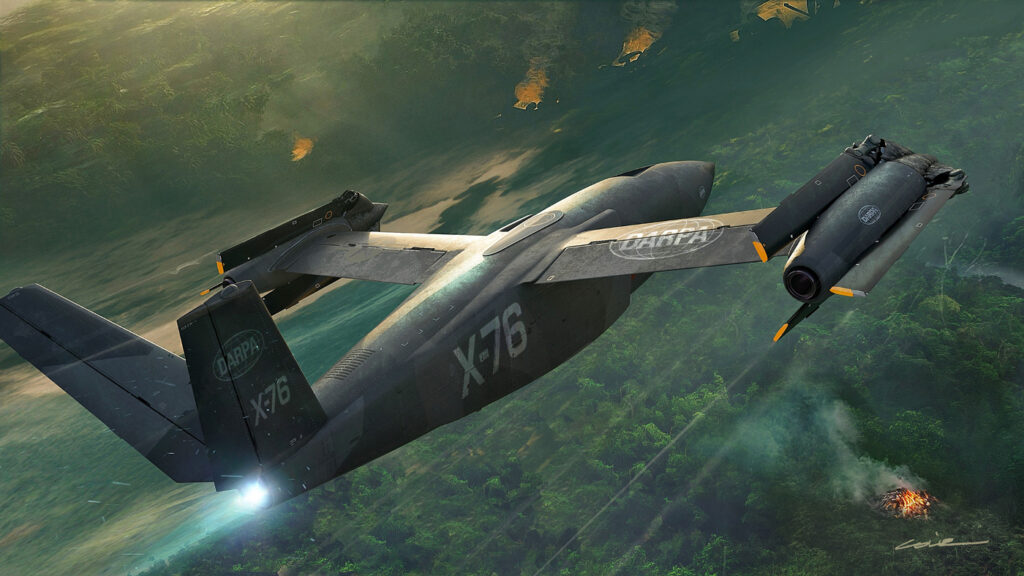
Image: DARPA
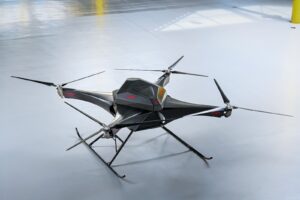
DARPA has officially named its next experimental aircraft the X-76, with Bell Textron now building a demonstrator designed to deliver jet-speed cruise performance alongside helicopter-style, runway-free operations.
Bell Textron broke ground on the X-76 following a successful Critical Design Review (CDR), placing the aircraft within the storied lineage of American X-planes. The designation is no accident — coinciding with the United States’ 250th anniversary, X-76 deliberately echoes the revolutionary year of 1776, according to DARPA.
Breaking Aviation’s Oldest Trade-Off
Military planners have long faced a stubborn dilemma. Fixed-wing aircraft deliver speed but demand runways. Helicopters offer go-anywhere flexibility but sacrifice performance. SPRINT aims to eliminate that compromise entirely.
The programme is a joint effort between DARPA and U.S. Special Operations Command. Its target is a platform cruising beyond 400 knots while hovering, deploying from unprepared surfaces, and operating without any runway at all.
That combination would mark a step-change in how special operations forces project power — particularly in contested or austere environments where runways are either unavailable or actively targeted by adversaries.
From Design to Metal
SPRINT entered Phase 2 in May 2025 following DARPA’s downselect to Bell Textron as prime contractor. With the CDR complete, the programme now shifts into manufacturing, integration, assembly, and ground testing of the X-76 demonstrator.
Bell brings considerable pedigree to the effort. Its prior work on tiltrotor technology makes it a natural fit for a programme pushing hard at the boundaries of vertical lift.
DARPA SPRINT programme manager Commander Ian Higgins, U.S. Navy, was direct about what the X-76 represents.
“For too long, the runway has been both an enabler and a tether, granting speed but creating a critical vulnerability,” Higgins said. “With SPRINT, we’re not just building an X-plane; we’re building options — the option of surprise, rapid reinforcement, and life-saving speed, anywhere on the globe, without needing any runway.”
The Road to First Flight
Phase 3 flight testing is scheduled for early 2028. That programme will determine whether the X-76 validates its core performance targets and whether the technologies it matures are ready to inform future platforms.
The aircraft joins a lineage of X-planes that shaped modern aviation — from the Bell X-1, which broke the sound barrier in 1947, to later demonstrators probing stealth and hypersonic flight. Not every X-plane reaches production. Their value lies in de-risking emerging technology and shaping what comes next.
For U.S. Special Operations Command, a successful SPRINT demonstrator could unlock new operational concepts — rapid insertion and extraction without fixed infrastructure, expanded reach into denied environments, and reduced dependence on vulnerable forward operating bases.
The X-76 will not be the final product. But what it proves — or disproves — over the skies of a test range in 2028 could define the next generation of military aviation.
Source: DARPA Press Release