Image: U.K. MoD © Crown copyright 2025
British and American defence scientists have taken a significant step toward deploying AI on the battlefield, testing whether military medics will trust a machine enough to hand it life-or-death decisions.
Researchers from the UK’s Defence Science and Technology Laboratory (Dstl) and the US Defense Advanced Research Projects Agency (DARPA) ran trials last October at Merville Barracks in Colchester and RAF Brize Norton in Oxfordshire. The work centres on a deceptively simple premise: medics are more likely to trust an AI that thinks the way they do.
Bridging the Trust Gap
AI does not reason like a human. It carries no instinctive moral framework, no hard-won clinical experience, and no grasp of the competing priorities that define battlefield medicine. That disconnect is a problem, and closing it is precisely what DARPA’s In the Moment (ITM) programme sets out to do.
ITM investigates whether encoding AI with an individual’s specific decision-making preferences makes that person more willing to delegate to it under pressure. The programme also tackles a parallel challenge: there is currently no reliable method for measuring how humans make decisions. ITM aims to change that.
Dstl is applying ITM tools and methodologies to a UK military setting, with medical triage as the proving ground.
Medics, Machines, and Moral Choices
The trials placed participants inside simulated mass casualty scenarios. Researchers first ran desktop exercises to baseline each medic’s decision-making profile, capturing where they stood on questions with no clean answer.
Would a medic treat an injured attacker before their victim? Would comparable injuries shift in priority based on military affiliation? How does a practitioner weigh one life saved against many? These factors, covering merit focus, quality of life, quantity of life, and affiliation preference, formed the foundation of each participant’s profile.
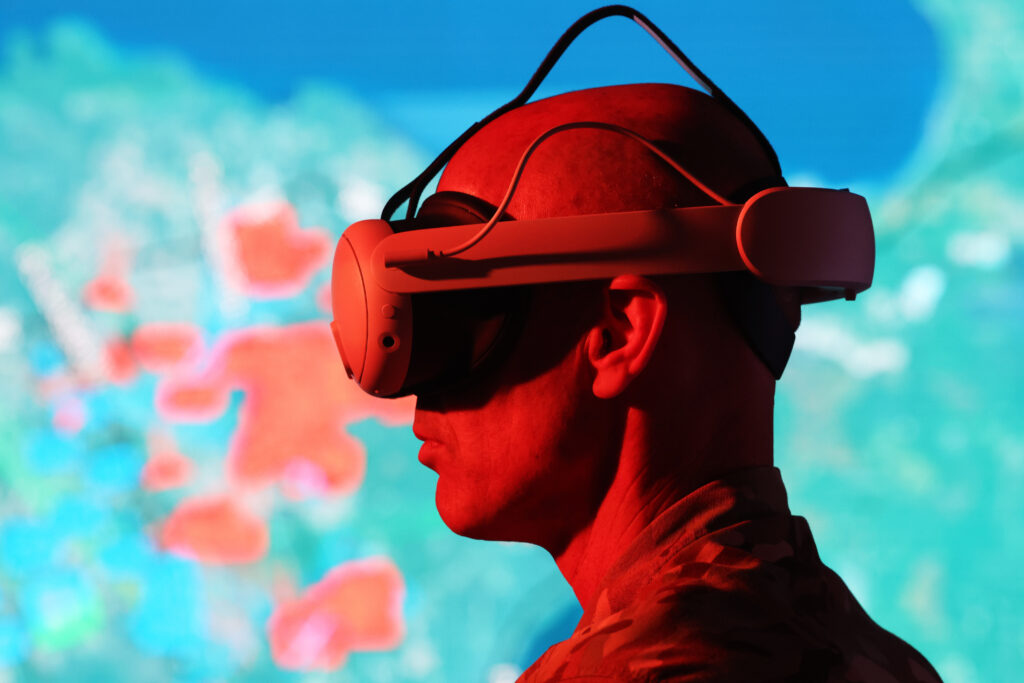
Participants then entered virtual reality environments that replicated the same triage pressures. An AI system, calibrated to either mirror or deliberately diverge from each individual’s recorded preferences, stepped into the role of a lead medic. Participants reviewed its recommendations and chose whether to delegate, unaware they were dealing with AI until the exercise concluded.
Scaling Experience Across the Battlefield
Dstl Human Factors Specialist Suzy framed the urgency behind the research. “We’re expecting a lot more information to be coming into the warfighter,” she said, according to Dstl. “We’re really interested in how the warfighter makes decisions based on some of this information and how potentially AI systems can help with that.”
The operational logic is compelling. A trusted AI could replicate the judgement of a seasoned medic across multiple practitioners at once, triaging larger casualty numbers faster and with greater consistency. In mass casualty events, that speed is the difference between life and death.
What Comes Next
Post-trial analysis is now underway. Findings feed into two of Dstl’s active research streams, Humans in Systems and People Implications of AI, with human-AI teaming and battlefield decision-making at the centre of both.
The destination is clear: move AI from a tool soldiers observe to a partner they trust enough to follow. In battlefield medicine, earning that trust may be the most important mission of all.
Video:Dstl
Source: UK MoD News Story