Image: Shield AI ©
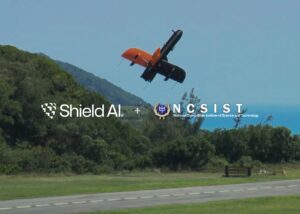
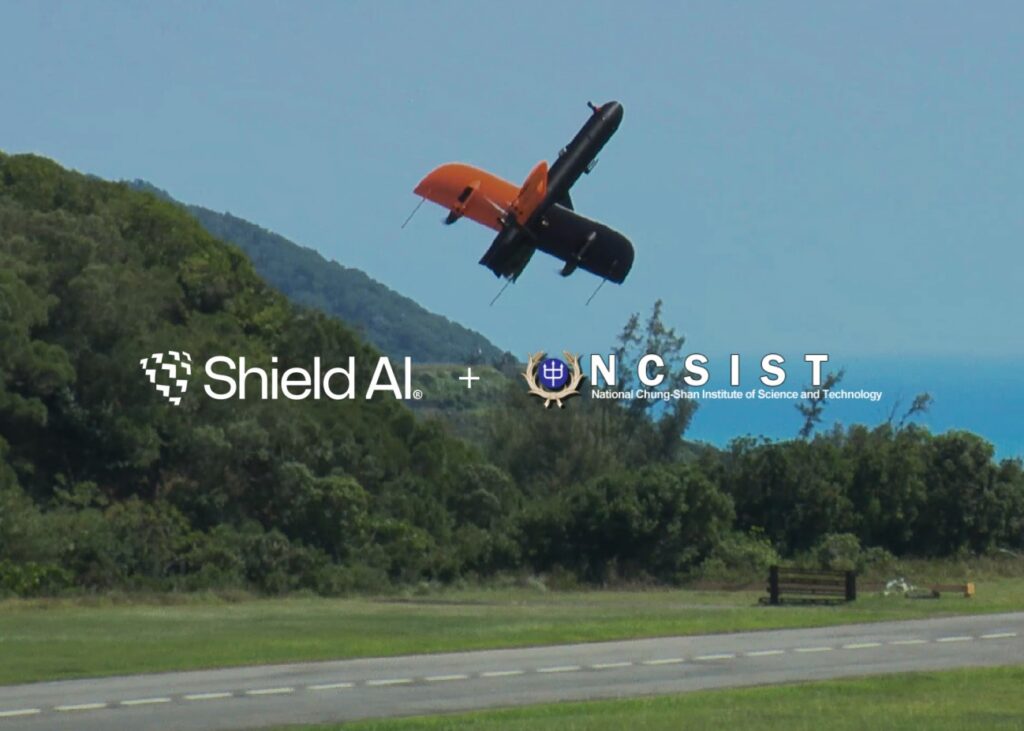
Shield AI and Taiwan’s National Chung-Shan Institute of Science and Technology (NCSIST) have successfully demonstrated a coordinated autonomous search mission using three Mighty Hornet III unmanned aerial vehicles, as per a recent press statement. The trial has triggered an expanded partnership covering broader deployment of Shield AI’s Hivemind autonomy software across the Institute.
NCSIST engineers, working alongside Shield AI specialists, developed indigenous AI pilots and fitted them to three Mighty Hornet III UAVs within under three months. Hivemind launched and coordinated the aircraft autonomously, directing each one to search a designated area while maintaining contact with the others. One aircraft manoeuvred around a partial no-fly zone inside its assigned sector. Hivemind then executed autonomous landings once the mission concluded.
Shield AI president and co-founder Brandon Tseng commented: “You can build ten million drones, but you can’t train ten million drone pilots.” He added that autonomy has become one of the most important force multipliers in modern warfare, and that sovereign AI pilot development strengthens Taiwan’s defence posture.
The demonstration completes an initial contract signed earlier this year, under which NCSIST engineers received hands-on training from embedded Shield AI staff to operate Hivemind independently. NCSIST President Li Shih-chiang commented that his engineers reached a high level of proficiency within three months, adding that Shield AI’s mentorship gave Taiwanese personnel the confidence to integrate the technology themselves.
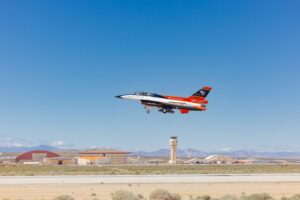
Hivemind has now piloted more than 30 platform types, including F-16s, jet-powered UAVs, helicopters, drone boats and ground vehicles. Mighty Hornet III is Taiwan’s first X-wing high-agility UAV, featuring a 3D-printed modular airframe that combines vertical take-off with fixed-wing cruising speed, requiring no ground launch equipment.
Learn more on Shield AI’s website