Image: SAAB
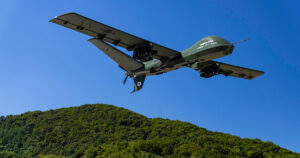
Saab and Embraer have unveiled the first Gripen E fighter jet produced on Brazilian soil — a milestone that cements the country’s place among a handful of nations capable of manufacturing advanced combat aircraft domestically.
The ceremony took place on 25 March at Embraer’s Gavião Peixoto industrial complex in São Paulo State. Brazilian President Luiz Inácio Lula da Silva attended alongside the Minister of Defence, José Múcio Monteiro Filho, and FAB Commander Lieutenant Brigadier Marcelo Kanitz Damasceno. Sweden’s Ambassador to Brazil, Karin Wallensten, represented the programme’s Scandinavian partner.
Industrial Milestone, Strategic Signal
The rollout is the product of a 2014 contract covering 36 Gripen fighters — 28 single-seat Gripen E and eight two-seat Gripen F variants. Deliveries began in 2020. Eleven aircraft have reached the FAB to date, with 14 more set to follow the same domestic production model.
Saab CEO Micael Johansson called the moment symbolic as much as industrial. “It symbolises the strength of a partnership built on trust, long-term vision, and true cooperation,” he said, according to Saab’s official release. He added that Saab intends to develop Brazil into a global Gripen export hub.
Bosco da Costa Junior, CEO of Embraer Defense & Security, said the programme gives Brazil sovereign capacity to produce a supersonic fighter “fully capable of executing air superiority missions” — a capability few countries in the world possess.
How the Aircraft Gets Built
Embraer’s Gavião Peixoto site leads final assembly, drawing on a mixed Brazilian and international supply chain. Saab’s facility in São Bernardo do Campo manufactures key aerostructures for the programme. Before handing each aircraft to the FAB, both companies conduct functional testing and production flight tests.
Once cleared, the jet will join ten already-delivered Gripens at the First Defence Group — 1st GDA — at Anápolis Air Force Base.
Already Flying Combat Missions
Brazil’s Gripens are not in storage. Since February, FAB aircraft have flown Quick Reaction Alert missions from Anápolis, guarding the airspace above the federal government district. It is a demanding operational role for a fleet still mid-delivery.
The Gripen E is a multi-role platform built for air defence, reconnaissance, and strike. Its network-centric architecture links aircraft across a tactical formation in real time, fusing sensor data to sharpen situational awareness and speed up threat response.
What It Means Beyond the Hangar
Producing a supersonic fighter at home does more than save on import costs. It builds engineering expertise, anchors a sovereign supply chain, and gives Brazil genuine leverage in future defence partnerships. For a country long reliant on foreign platforms, that independence carries real strategic weight.
For Saab, the programme locks in a deep industrial relationship with Latin America’s largest defence market. For Embraer, it is proof that Brazil can compete at the top end of combat aviation — a sector only a small number of companies globally can credibly enter.
Production at Gavião Peixoto will continue as the remaining contract aircraft roll down the line — quietly turning what began as an ambitious procurement deal into an enduring industrial capability.
Source: SAAB Press Release