Image: Anduril
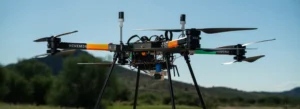
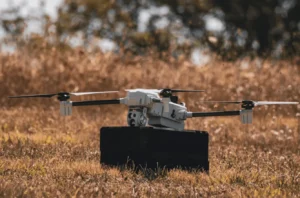
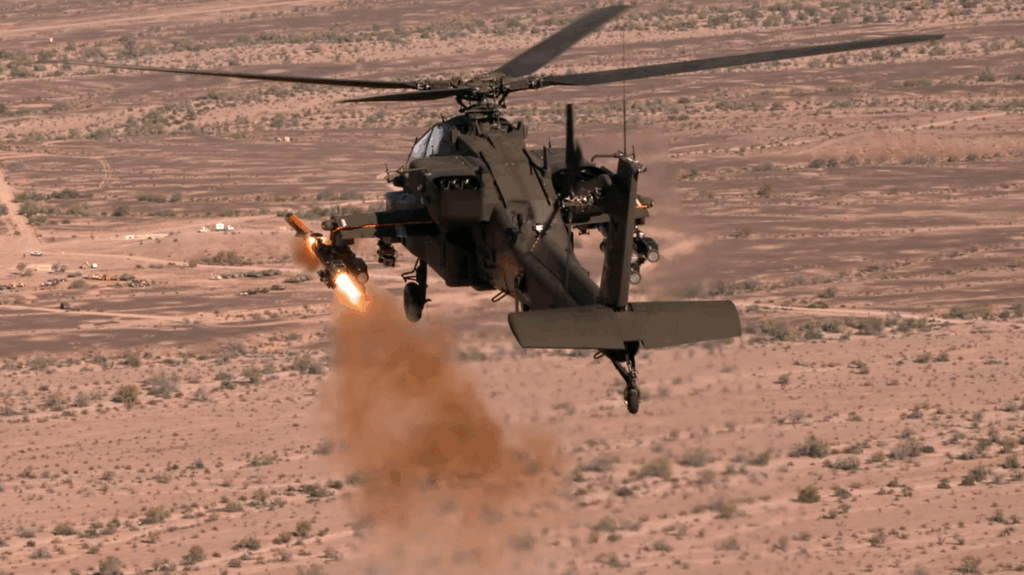
An AH-64E Apache attack helicopter has, for the first time, executed a rocket-powered launch of an Anduril Altius-700 launched effect, a milestone that significantly expands the reach, lethality, and sensing capability of U.S. Army attack aviation.
The launch took place at Yuma Proving Ground, Arizona, last month during Concept Focused Warfighting Experiment 26 (CFWE26). Army aviators from the Combat Capabilities Development Command Aviation & Missile Center (DEVCOM AvMC) Technology Development Directorate carried out the airborne test, validating a new government-developed universal launch system designed to enable low-altitude drone deployment from rotary-wing aircraft, according to Anduril Industries.
The integration pairs the Apache’s mobile strike maneuverability with the Altius-700’s category-leading range, giving pilots expanded situational awareness and on-demand strike options without putting crewed aircraft at additional risk.
The Altius-700 represents a significant step forward from its predecessor. Building on the Altius-600, which first launched from UH-60 Black Hawk helicopters in 2020, the newer system delivers extended range, longer loiter time, and greater payload capacity. A September 2025 test event, in which Army aviators executed multiple successful Altius-700 airborne launches from a Black Hawk, laid the groundwork for the Apache integration demonstrated at CFWE26.
The two platforms serve distinct but complementary mission sets. Black Hawks support combat utility, search and rescue, and troop transport operations, where launched effects extend battlefield awareness beyond the helicopter’s immediate vicinity. Apaches, optimised for armed reconnaissance and anti-artillery roles, gain a standoff sensing and strike capability that allows crews to identify and engage threats before entering their engagement envelope.
Together, the integrations validate what Army planners term manned-unmanned teaming, a concept that gives commanders autonomous, rapidly deployable tools capable of delivering on-demand effects across a variety of mission scenarios. DEVCOM AvMC has worked closely with Anduril to build integration architectures applicable across multiple Army aviation platforms.
The demonstrations carry weight beyond the test range. The U.S. Army is investing heavily in distributed sensing and precision effects as it prepares for potential high-end conflict against peer adversaries. Large, expensive platforms face growing survivability challenges in contested environments; smaller, attritable systems like the Altius-700 offer a cost-effective method of extending coverage and lethality without increasing risk to aircrew.
CFWE26 marks the most advanced public demonstration of launched effects aboard Army attack aviation to date. Anduril describes the Altius family as offering multi-domain launch capability and a highly flexible operational profile suited to a wide range of mission sets. The Army has signalled its intent to field autonomous and attritable assets at scale, and further integration tests across additional rotorcraft platforms are expected as the programme matures.
Source: Anduril Press Release