Image: Northrop Grumman
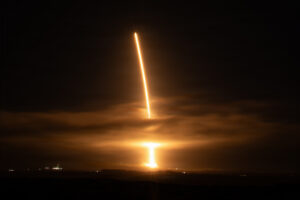
Northrop Grumman and the U.S. Air Force are reporting significant progress on the LGM-35A Sentinel intercontinental ballistic missile programme, with first flight targeted for 2027 and initial operational capability expected in the early 2030s.
A restructured acquisition strategy is driving faster development of America’s next-generation ground-based nuclear deterrent, according to Northrop Grumman. Hardware testing, supply chain expansion and infrastructure prototyping are all advancing in parallel, compressing timelines without sacrificing performance standards.
Replacing the Minuteman III
Sentinel is designed to replace the ageing Minuteman III ICBM, the ground-based leg of the U.S. nuclear triad. The system will span more than 32,000 square miles across five states, requiring new launch silos, command infrastructure and transport systems.
The programme draws on lessons from the B-21 Raider stealth bomber, with Sentinel designed entirely within a digital ecosystem to boost collaboration and engineering efficiency. Its three-stage booster uses solid rocket motors made from composite materials 70% lighter than those in the Minuteman III, increasing payload capacity, range and accuracy for what Northrop describes as “no-fail ICBM missions.”
Hardware Milestones
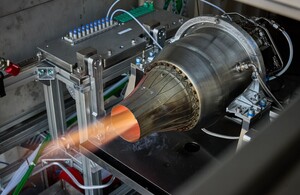
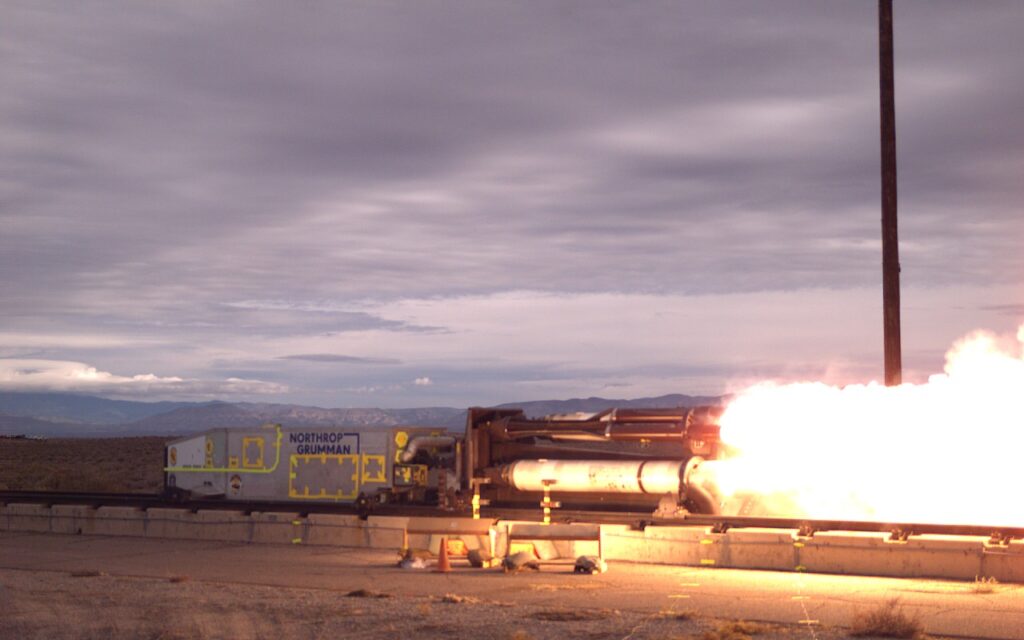
The missile has moved from digital blueprints into active prototyping, assembly and testing. Northrop Grumman has assembled the first complete three-stage Sentinel booster, verifying design integrity and manufacturing processes. Solid rocket motors for the first five flight tests are already in production.
Two Interstage Separation Tests confirmed the missile can cleanly shed spent first and second-stage motors during flight. A shroud fly-off test validated the protective cover housing the missile’s payload.
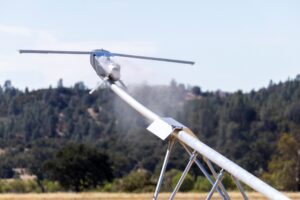
An initial mass model sled test subjected the Navigation Inertial Measurement System to flight-representative stress conditions. Passing the test confirms the guidance hardware can survive the environmental forces of actual flight, which is critical to Sentinel’s accuracy and mission reliability.
Infrastructure and Command Systems
Alongside missile development, supporting infrastructure is progressing at pace. Northrop broke ground on a prototype Sentinel Launch Silo tube to validate structural design and construction methods. The new modular silo architecture is expected to cost less than refurbishing existing Minuteman III silos while improving performance and long-term maintainability.
Mission-critical transport systems cleared a cross-country road test, confirming high-value assets can be safely moved between facilities. The Launch Support System, a digital command and control network, completed its critical design review, clearing the way for build, test and qualification phases.
Industrial Scale
More than 500 supply chain partners and upwards of 10,000 professionals support Sentinel across the country. Northrop Grumman has invested $13.5 billion in infrastructure and research and development over the past five years across critical national security programmes. Of that total, $2 billion went specifically toward expanding solid rocket motor capacity, directly supporting Sentinel’s ability to scale production.
Sarah Willoughby, vice president and general manager for strategic deterrent systems at Northrop Grumman, said the programme “exemplifies what’s possible when a bold acquisition approach meets relentless innovation,” adding that its workforce and partner network were “united by a common purpose to field the Sentinel weapon system with speed and scale.”
Long-Term Deterrence
The programme is designed to serve U.S. strategic deterrence requirements through 2075, making design resilience and long-term adaptability central engineering priorities. Northrop and the Air Force are also engaging with communities surrounding missile wings, gathering data to support construction planning, fielding and future operations.
With 2027 approaching, programme momentum is set to become more publicly visible as construction of critical facilities begins and the first Sentinel flight test draws near.
Source: Northrop Grumman Press Release