Image: RAF
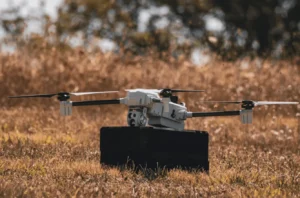
The Royal Air Force’s first Autonomous Collaborative Platform has completed a full year of intensive flight testing, marking a significant step toward reshaping how British air power operates.
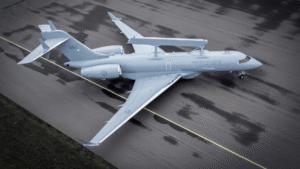
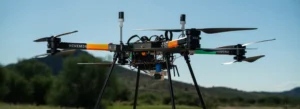
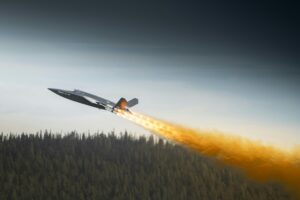
The RAF’s StormShroud programme has hit a string of critical development milestones since entering operational service in May 2025. Designed to suppress enemy radar systems and degrade integrated air defences, the platform is built to enhance the survivability of crewed fast jets, including the Typhoon and F-35B Lightning, in contested airspace.
According to the RAF, StormShroud is the first in a broader family of Autonomous Collaborative Platforms, known as ACPs. These systems are central to the service’s strategy for next-generation air combat.
First Flight and Early Testing
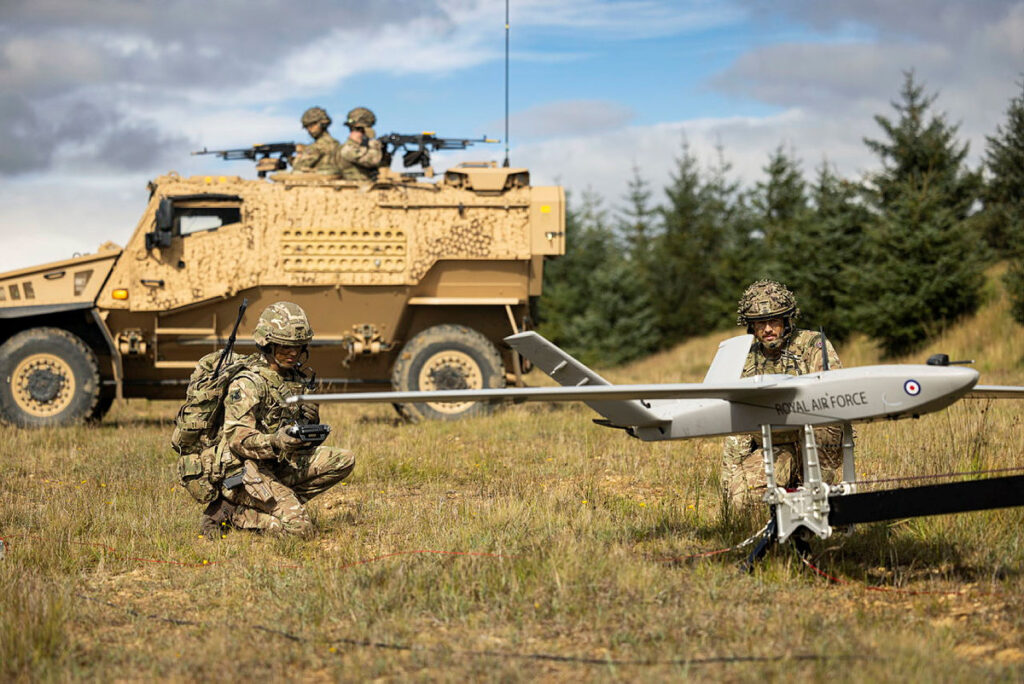
216 Squadron marked a historic moment in June 2025, completing StormShroud’s first in-service flight over air weapons ranges at RAF Spadeadam. The mission, supported by 1 Squadron RAF Regiment, launched a period of sustained development flying across multiple UK sites.
Follow-on test sorties took place at RAF Spadeadam, RNAS Predannack, and the Salisbury Plain Training Area. Testing scaled progressively, beginning with single-aircraft operations before advancing to multi-platform coordination.
That progression culminated in a December 2025 exercise on Salisbury Plain. Both units demonstrated simultaneous, coordinated operation of multiple StormShroud platforms in a complex, dynamic environment.
Tactics and Procedures Take Shape
Alongside the flight programme, 216 Squadron prioritised developing the Tactics, Techniques, and Procedures, known as TTPs, needed to employ the platform effectively in operations.
A joint deployment to RAF Spadeadam in September 2025 brought both squadrons together to refine those procedures. The exercise advanced operational readiness and deepened the working relationship between 216 Squadron and the RAF Regiment.
The Regiment’s involvement signals its growing role in enabling autonomous air systems. Ground-based operation and support of ACPs looks set to become a core regimental function as the programme expands.
A New Organisational Model
216 Squadron has moved beyond testing to build the personnel framework for the RAF’s uncrewed future. The squadron now operates a blended structure, combining regular aircrew, engineers, and RAF Regiment personnel with a substantial reserve component.
Critically, several of those reservists bring specialist experience from the commercial UAS sector. Their industry knowledge has directly accelerated capability development within the squadron.
The integration has proven effective enough to prompt a retention effect. Multiple reservists from the first cohort are now considering full-time military service, strengthening both 216 Squadron and the wider ACP programme.
2026: Exercises and Advanced Autonomy
Development has continued at pace into 2026. Flying activity resumed in Cornwall in February, with domestic and international exercises planned throughout the year.
Those exercises will focus on refining how StormShroud and its payload are employed operationally. Work has also begun on the next stage of the platform’s development, with advanced autonomy features that the RAF says will prove transformative for how the system performs in future conflicts.
Wider Implications
StormShroud’s progress reflects a broader shift in Western air power doctrine, toward teaming crewed and uncrewed assets to defeat sophisticated enemy air defences. Systems like StormShroud offer a way to suppress threats without putting pilots at direct risk.
For the RAF, the platform represents more than a single capability. The organisational models, TTPs, and autonomy work developed around StormShroud are laying the groundwork for every ACP that follows, ensuring the service retains a leading position in autonomous air warfare.
Source: RAF News Article