Image: KNDS
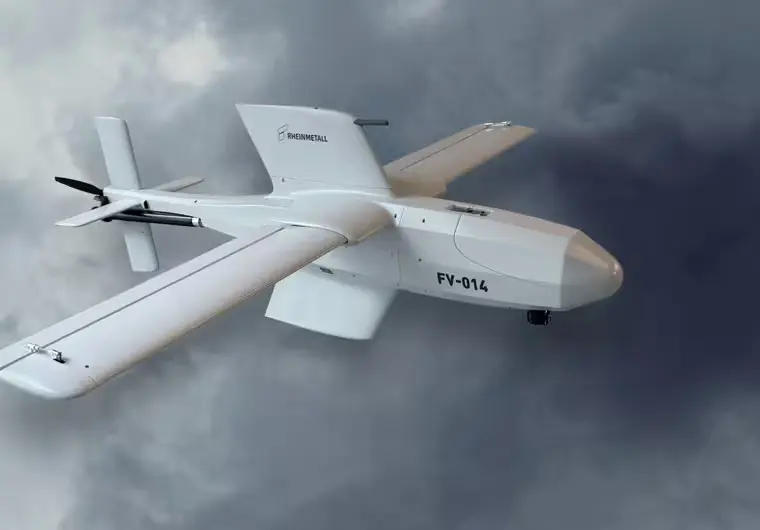
Germany’s Bundeswehr has awarded Rheinmetall a multi-billion-euro framework contract for its FV-014 loitering munition system, marking a significant step in Berlin’s push to modernise its strike drone capabilities.
The contract was signed in Koblenz, with the first call-off valued at approximately €300 million gross. Rheinmetall will book the order in April 2026. Deliveries are scheduled to begin in the first half of 2027, following system qualification from the second quarter of 2026. The framework agreement optionally covers a five-figure number of FV-014 autonomous reconnaissance and strike drones, according to Rheinmetall.
A Rapid Development Cycle
Rheinmetall developed the FV-014 in a notably short timeframe. CEO Armin Papperger highlighted the pace of delivery, saying the company had built an autonomous drone combining reconnaissance and strike capabilities and would begin producing the system at industrial scale very soon. The speed of development reflects broader pressure across NATO to field loitering munitions rapidly, driven by lessons from the war in Ukraine, where such systems have reshaped tactical engagement on the front line.
System Capabilities
The FV-014 is a dual-role platform, combining intelligence-gathering with precision strike in a single airframe. It carries a 4 kg warhead with a detonator mechanism and has an operational range of up to 100 km. The drone can remain airborne for up to 70 minutes, allowing operators to monitor and track targets before committing to an engagement, a key operational advantage over conventional munitions. Papperger said the system would allow the Bundeswehr to protect its own forces and engage critical targets in a fast, controlled and effective manner.
Industrial and Geopolitical Significance
The FV-014 is manufactured entirely within the European Union. European governments have faced growing pressure to reduce dependence on non-EU defence suppliers, particularly for emerging technology categories such as autonomous systems. For Rheinmetall, the contract consolidates its position as Germany’s primary land systems and munitions provider. The Düsseldorf-based defence group has seen revenues surge since 2022, as Germany and its allies dramatically increased defence spending following Russia’s full-scale invasion of Ukraine.
The Bundeswehr’s decision to procure a five-figure quantity of loitering munitions also signals a doctrinal shift. Germany, historically cautious about autonomous weapons procurement, is moving to integrate strike drone capability at scale, a development that carries weight across NATO’s eastern flank.
What Comes Next
Qualification trials are expected to begin in the second quarter of 2026, with initial deliveries to follow within months. The scale of the framework agreement suggests procurement could extend well beyond the first call-off, depending on operational requirements and budget allocations. The order represents one of the largest loitering munition contracts awarded by a European military to date, positioning Rheinmetall alongside established players in the sector as demand for autonomous strike systems accelerates across the continent.
Source: Rheinmetall Press Release