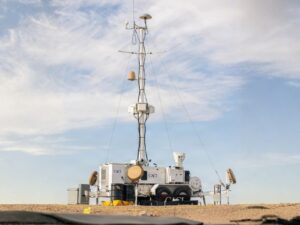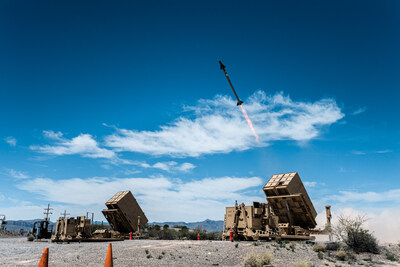
Image: Leidos
Leidos has received a $617 million award from the U.S. Army to build and deliver additional launchers for the Indirect Fire Protection Capability Increment 2 (IFPC Inc 2) system, the Army’s latest mobile, ground-based air defence platform.
Contracts Push Total Awards to $1.2 Billion
According to a recent press statement, the award combines with $356 million in contracts issued in July and September 2025, bringing Leidos’s total IFPC Inc 2 production commitments to nearly $1.2 billion. The company now has more than 100 launchers committed for delivery.
The contracts represent a defining investment in the programme’s progression toward full-rate production. Funding additionally supports continued research, development, and testing, paving the way for future orders through 2029.
Industry Confidence and Supply Chain Resilience
Leidos vice president for the IFPC Inc 2 product area Dino Pusinsky said: “These awards reflect the Army’s confidence in our team and the growing demand for a proven defence system that’s available today.”
He added: “We’re working with our Army and industry partners to apply innovative manufacturing and engineering strategies that ensure this capability is ready when and where it’s needed, while building resiliency and capacity across the supply chain to support sustained, scalable production.”
Ahead-of-Schedule Delivery Signals Programme Maturity
Leidos delivered the first IFPC Inc 2 Initial Operational Test and Evaluation launcher two months ahead of schedule, a milestone the company says reflects the execution discipline underpinning its air and missile defence work, part of its NorthStar 2030 strategic framework.
Open Architecture Designed for Evolving Threats
Built on an open architecture, IFPC Inc 2 is designed to integrate current and future effectors, providing warfighters with flexible, scalable protection against cruise missiles and unmanned aerial threats. The system connects with existing command-and-control networks and maintains compatibility with standard Army transport platforms and vehicles.
Its modular, plug-and-play design allows the platform to evolve alongside emerging threats, a key requirement as adversaries continue to develop faster and more capable aerial systems.
Source: Leidos Press Release