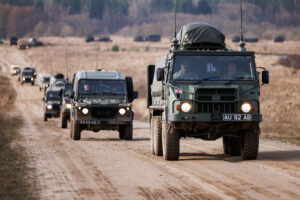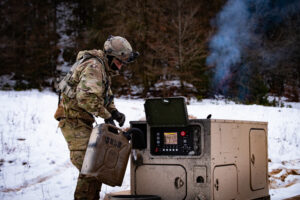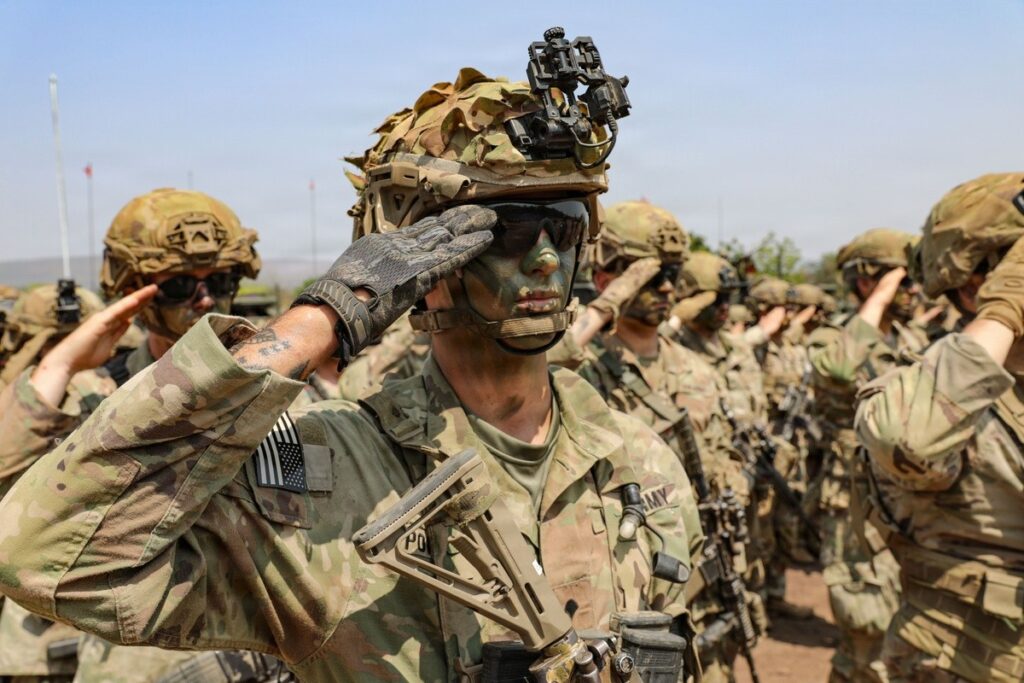
Image: U.S. Army Soldiers from the 1-2 Stryker Brigade Combat… (SSG Tamie Norris)
The U.S. Army has submitted a $253 billion budget request for fiscal year 2027, prioritising next-generation weapons development, industrial base modernisation, and the acceleration of force transformation.
Army leaders framed the request as essential to maintaining dominance in future conflicts. As per the Army’s official budget materials, Maj. Gen. Rebecca McElwain, Director of the Army Budget, stated: “This budget reflects the Army’s steadfast commitment to ensuring it remains the world’s most capable and ready land force.”
Procurement and Industrial Base Investment
Procurement funding sees the sharpest increase, rising 28.7 percent on a discretionary basis. A $3.1 billion allocation targets modernisation of the Army’s Organic Industrial Base, the government-owned manufacturing sites critical to munitions and equipment production. Strengthening domestic production capacity has become a strategic priority across the U.S. defence establishment, particularly following supply chain pressures exposed by sustained overseas commitments and support to allies.
Technology and Research
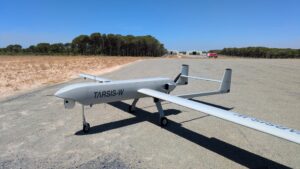
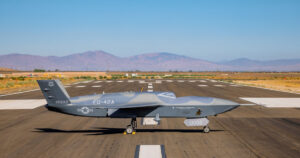
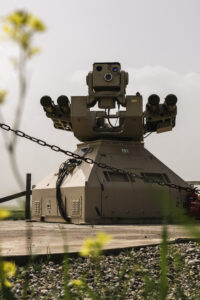
The research and development budget rises 12.9 percent, underscoring the Army’s drive to maintain technological superiority. Key programmes receiving investment include the MV-75 Cheyenne tilt-rotor aircraft, the advanced M1E3 Abrams main battle tank, Counter-Small Unmanned Aircraft Systems (C-sUAS) capabilities, and the Terminal High Altitude Area Defense (THAAD) system. The inclusion of counter-drone funding reflects growing concern about the proliferation of small unmanned systems, a threat demonstrated repeatedly in recent conflicts.
Acquisition Reform
Beyond raw funding increases, the budget pushes for a faster acquisition process. Army officials described plans to streamline procurement, reducing the time it takes to move new technology from development into service. That emphasis on speed aligns with broader Pentagon efforts to close the gap between capability development and battlefield deployment.
Fiscal Accountability
Despite significant budget growth, the Army stressed its commitment to responsible spending. McElwain commented: “This budget was forged to meet the challenges of a complex global security environment all while honouring our commitment to our people and the American taxpayer. Every dollar in this request is deliberately allocated to create a more lethal, modern, and resilient force.” Officials highlighted acquisition reform and technological efficiency measures as mechanisms to ensure value for money.
Personnel and End-Strength Growth
The budget proposes a 5.3 percent increase in military personnel funding, subject to reconciliation, supporting an end-strength growth of 18,300 Soldiers across active and reserve components. The request also includes a proposed pay rise of five to seven percent for all service members.
Strategic Context
The FY27 request aligns with the current administration’s stated defence priorities: rebuilding military readiness, restoring deterrence, and reforming defence spending. The Army’s emphasis on lethality, modernisation, and force structure growth positions it to address both near-peer competition and the evolving character of warfare, including drone proliferation, long-range precision fires, and multi-domain operations.
Full programme details and budget breakdowns are available through the Army’s official budget materials.
Source: U.S. Army News