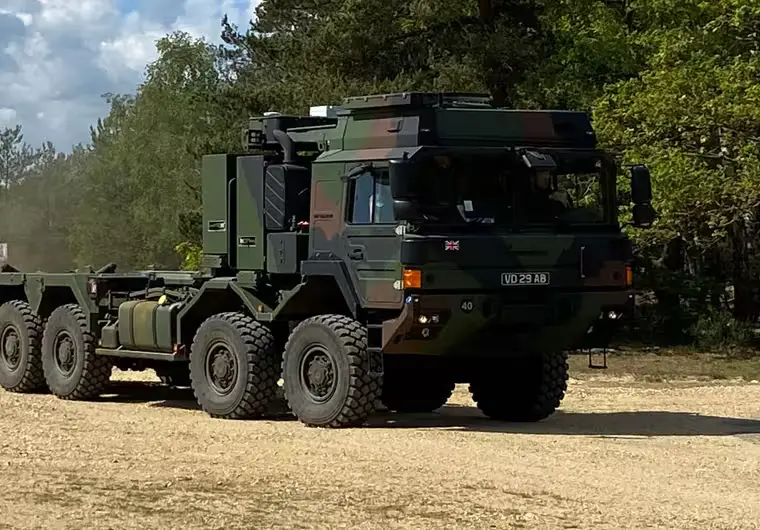
Image: Rheinmetall
British soldiers have operated the UK’s first autonomous HX convoy, marking a significant step in the Army’s push towards uncrewed logistics capability.
Rheinmetall and the UK Ministry of Defence delivered the training programme over two weeks at the Combat Service Support Trials and Development Unit in Aldershot. Personnel from 8 Squadron, 27 Regiment Royal Logistic Corps took part, preparing them for Project Convergence Capstone 6 under the Army’s Project MAIA initiative, as per a recent press statement.
The Army launched Project MAIA to explore autonomous systems for future logistics operations. This milestone shows how the technology can boost operational effectiveness while building soldiers’ confidence in managing autonomous convoys.
Training used the HX2 development vehicle White Pony, fitted with Rheinmetall’s PATH Autonomous Kit. The platform-agnostic system lets existing vehicle fleets drive themselves, combining sensors, AI navigation and robotic controls. Vehicles can operate alone or as part of a convoy.
Soldiers trained across several roles, including Convoy Commander, Lead Vehicle Driver and Safety Driver. They then progressed through demanding on-road and off-road exercises. Scenarios included blocked routes, disabled vehicles and dynamic convoy management, mirroring conditions expected at Fort Irwin, California, during PCC6.
Rheinmetall teams from Austria, the UK and Canada delivered the programme jointly, reflecting the Group’s international expertise.
Christoph Müller, CEO of Rheinmetall MAN Military Vehicles, commented: “Autonomous technologies are transforming the future of military logistics.” He added that the collaboration helps British Army personnel build the skills and confidence needed to operate next-generation autonomous capabilities, and confirmed Rheinmetall’s continued support ahead of PCC6.
PCC6 will bring together international partners to evaluate emerging technologies in realistic environments, generating insights that could shape future logistics and resilience planning.
Read more on Rheinmetall’s website