Poland is redirecting its defence procurement toward domestic and central European manufacturers, moving away from distant suppliers that struggle to deliver quickly. Government officials and company executives say the shift aims to secure Poland’s supply chains as it builds Europe’s biggest army.
A Fourfold Increase in Domestic Spending
Polish defence procurement from domestic firms, including joint ventures with other central European companies, has nearly quadrupled since 2022. It reached 30.4 billion zlotys ($8.15 billion) last year, according to data from Poland’s Armaments Agency.
The war in Ukraine has pushed defence budgets higher across Europe. For Poland, which borders Ukraine and views Russia as an existential threat, the buildup has become a national priority.
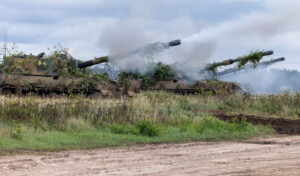
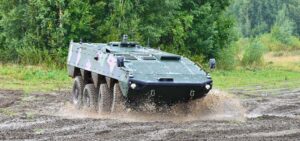
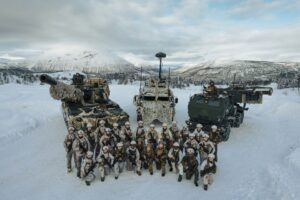
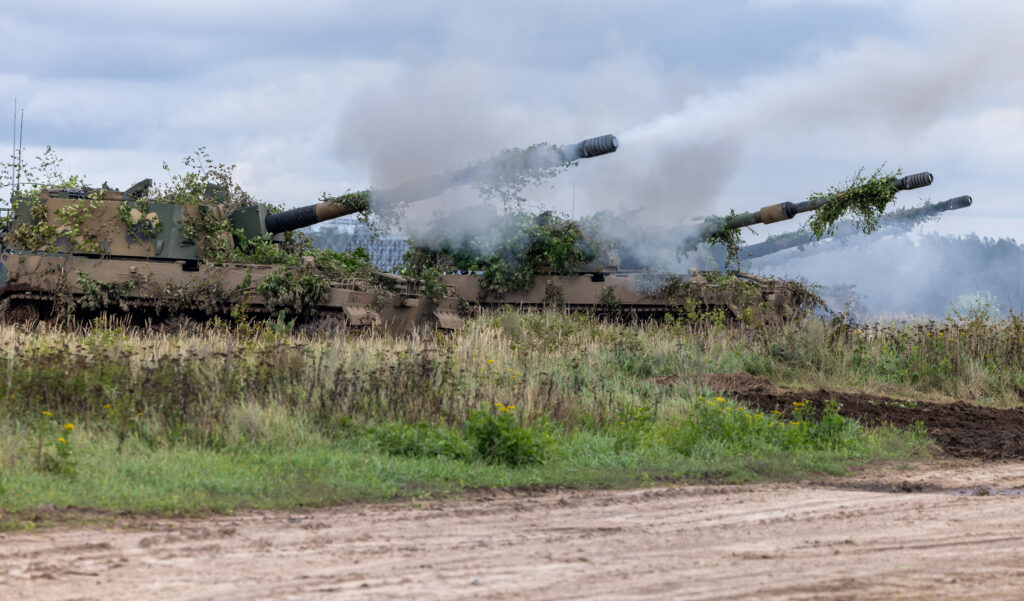
“We’re building the largest land army in Europe,” Deputy State Assets Minister Konrad Golota said. He added that Polish-made, Polish-used equipment now carries growing weight in procurement decisions.
Poland expects to spend roughly €53 billion ($61.45 billion) on core defence this year, the fourth-highest total in the EU behind France, Italy and Germany, according to NATO figures. That marks an increase from €44 billion in 2025 and represents about 4.7% of GDP.
Big Systems Remain, But Local Production Grows
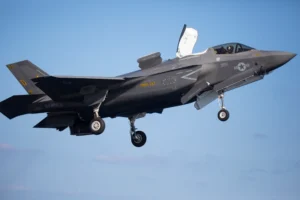
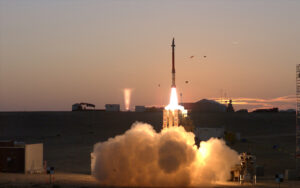
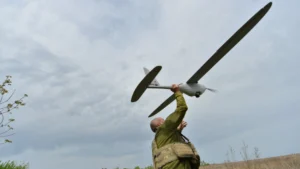
Major foreign-built platforms still matter to Warsaw. U.S.-made Patriot missile batteries, Abrams tanks and F-35 jets remain central to Poland’s arsenal. But officials now prioritise expanding domestic and regional output of drones, ammunition and other high-demand equipment.
The approach mirrors a wider European push to rebuild defence industrial capacity. The war in Ukraine exposed how fast modern conflict can drain ammunition stockpiles.
“This is not merely an investment to ensure we have a highly developed defence industry… but a matter of supply chain independence,” Defence Minister Wladyslaw Kosiniak-Kamysz said. He called it a guarantee of independent front-line supply.
Central European Firms Seize the Opening
Poland historically relied on state-owned producer PGZ and U.S. suppliers, leaving limited room for firms from the Czech Republic, Slovakia and Hungary. That is now changing.
Czech ammunition supplier CSG has signed several agreements to expand Polish production, including a propellant technology transfer to PGZ subsidiary MESKO. CSG’s Polish unit also acquired component maker Domar MS, and in August the company signed a €100 million deal with PGZ unit Dezamet and a €150 million contract with Huta Stalowa Wola.
“Poland is a strategic market for CSG,” said CSG Polska Chief Executive Wojciech Grzonka, calling it central to the firm’s long-term expansion.
Elsewhere, Grupa Niewiadow is partnering with KNDS Ammo France on 155mm ammunition production, targeting 180,000 rounds annually from next year. PGZ is also working with Estonia’s Frankenburg Technologies on short-range air defence systems, while Germany’s Rheinmetall is building production and maintenance capacity in Poland.
A Regional Shift Takes Hold
Zdenek Rod, a defence expert at CEVRO University in Prague, said Poland is pioneering efforts to “near-shore” military production within Europe, balancing NATO interoperability with regional resilience.
Poland’s armed forces now exceed 220,000 personnel, among Europe’s largest. Along with Estonia, Poland is close to meeting NATO’s 2035 target of 5% GDP defence spending. Warsaw recently offered to jointly produce Patriot missiles with Ukraine and the United States.
“If you want to sell in Poland, you have to invest in Poland,” Golota said. “The more factories and know-how we have on our side, the better our defence is.”