Image: Airbus
Airbus has presented three of its uncrewed aerial systems in Santiago de Chile, positioning them as a coordinated response to the security, surveillance, and disaster-response demands of a region spanning 20 million square kilometres.
The Flexrotor, Aliaca, and SIRTAP are designed to complement crewed helicopters and address missions ranging from border surveillance and counter-narcotics to wildfire monitoring and search and rescue, according to Airbus.
Latin America presents a unique operational environment. Its 670 million inhabitants span 33 countries and a vast arc of terrain, from Chile’s Atacama Desert and Mexico’s arid plateaux to the Amazon basin and the Andes, the world’s longest continental mountain range. The region’s exposure to wildfires, illegal maritime activity, and porous borders makes the case for persistent, sensor-equipped aerial surveillance a compelling one.
SIRTAP: high-endurance tactical UAS for land operations
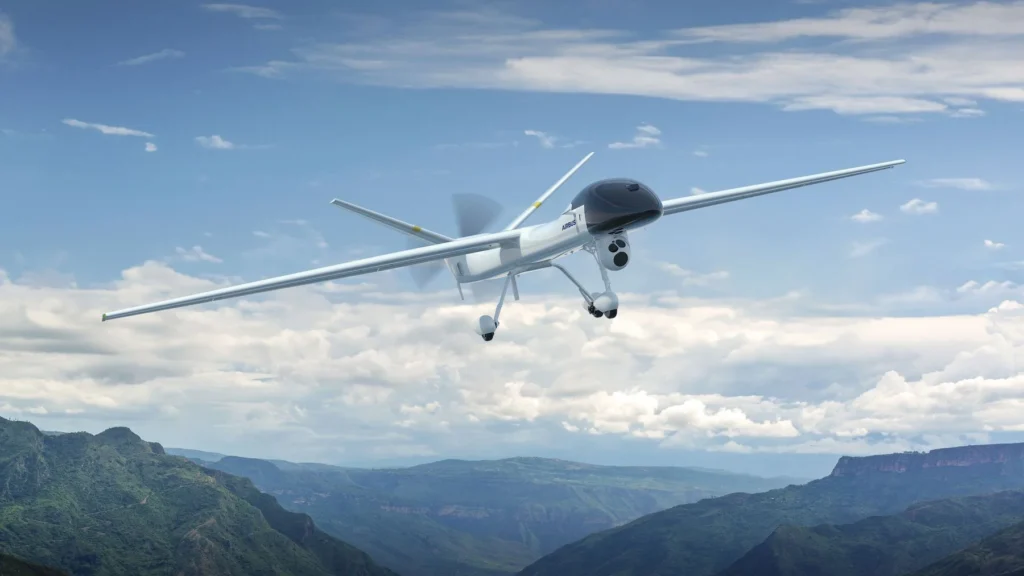
The SIRTAP sits at the top of Airbus’s UAS offer for the region. With more than 20 hours of endurance, the system carries two simultaneous payloads, an electro-optical turret and a multi-mission radar, giving operators persistent and layered situational awareness. Airbus says the platform covers a wide mission spectrum: convoy escort, area surveillance, force protection with guided weaponry, and border monitoring.
The SIRTAP’s capability profile is particularly relevant for remote and high-altitude theatres such as the Gran Chaco region and the Bolivian altiplano, where conventional aviation faces logistical and performance constraints. Its long-range search and rescue role also addresses a capability gap in the Andes, where extreme terrain complicates conventional rescue operations.
Wildfire surveillance is another priority mission. Sustained aerial monitoring using the platform’s sensor suite allows fire services and civil authorities to track fire progression across large areas, a capability with growing relevance as climate-driven fire seasons intensify across South America.
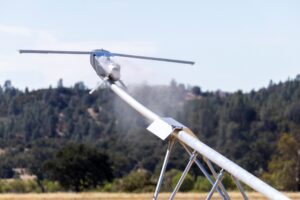
Flexrotor: compact VTOL for fire surveillance and forward reconnaissance
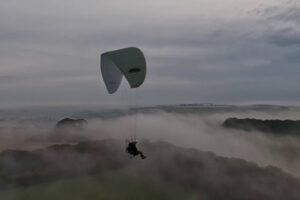
The Flexrotor is a tactical vertical take-off and landing (VTOL) platform built for intelligence, surveillance, and reconnaissance missions. Its small footprint and autonomous take-off and landing capability make it deployable across a wide range of land environments, from the open expanses of the Pampas to wildfire-prone zones in Chile, Argentina, and Brazil.
More than 12 hours of endurance underpins continuous and night-time operations. U.S. firefighting operator Precision already uses the Flexrotor for round-the-clock fire surveillance, relying on high-resolution sensors to transmit live video feeds and identify active hotspots invisible to the naked eye. The platform carries payloads of up to 8 kg, supporting electro-optical systems and advanced sensors suited for critical infrastructure monitoring and disaster-area assessment. Its compact dimensions allow rapid global deployment and straightforward field assembly.
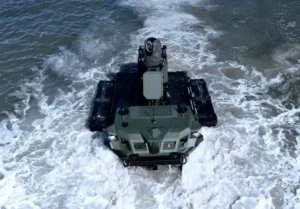
Aliaca: ISR platform with coastline and border capability
The Aliaca rounds out Airbus’s UAS trio, addressing multi-terrain surveillance requirements across both land and coastal environments. Its hybrid propulsion variant achieves a 100 km range, enabling long-distance sorties into mountainous or maritime zones. A 15-minute deployment time ensures immediate operational readiness, a critical attribute when surveillance assets are needed on-station quickly.
Airbus positions the platform as an effective tool against illegal offshore activity, including drug trafficking, illegal fishing, and marine pollution, as well as land border surveillance. It is well-suited to states with both extensive land borders and dual maritime coastlines, with Colombia a notable example.
Source: Airbus Press Release