Image: DE&S
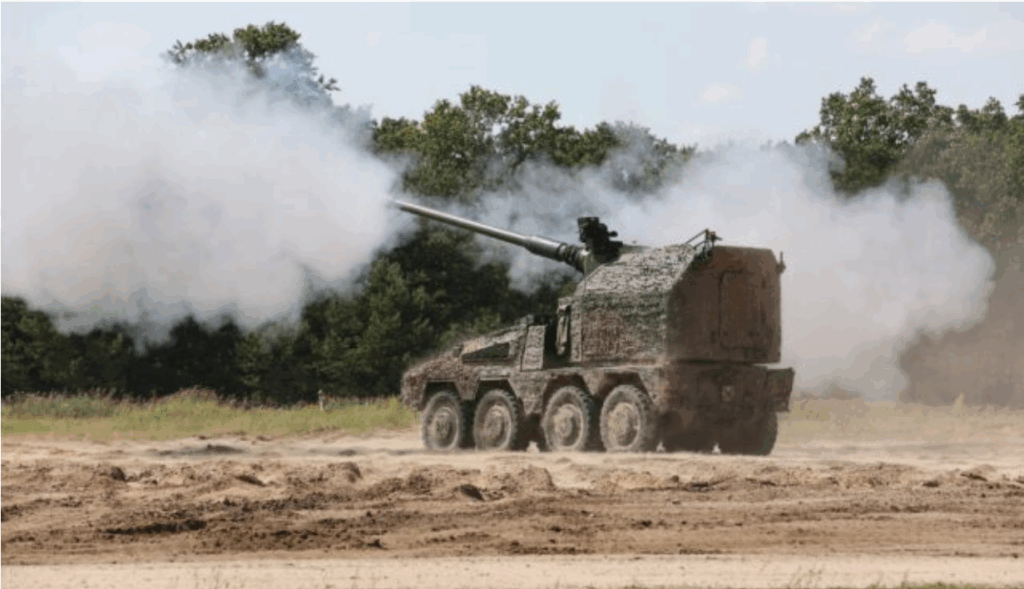
The British Army has taken a significant step toward restoring its long-range artillery capability, with a £53 million contract awarded to ARTEC GmbH for the procurement of 37 weapon systems for the Remote Controlled Howitzer (RCH) 155.
The Organisation for Joint Armament Cooperation (OCCAR) placed the contract on behalf of the British Army, covering long-lead production components — including barrels, muzzle brakes, breech assemblies, recoil systems, and trunnions — that form the core of the artillery gun module.
The announcement carries a significant domestic industrial dimension. Around £30 million of the contract value goes toward developing a new large-calibre gun barrel manufacturing facility — known as the Gun Hall — at Rheinmetall’s site in Telford. The investment is expected to generate approximately 100 skilled jobs at the facility, with further employment supported across the broader UK supply chain.
Restoring a Capability Gap
The RCH 155 serves as the Army’s long-term Mobile Fires Platform (MFP), selected to replace the AS90 self-propelled howitzers donated to Ukraine in 2022. The system integrates two primary components: the Boxer drive module, which provides protected mobility, and the Artillery Gun Module (AGM) housing the turret and weapon system.
The platform’s performance specifications mark a substantial leap over its predecessor. The RCH 155 fires up to eight rounds per minute at targets up to 70 kilometres away, depending on ammunition type. It reaches road speeds of 100km/h, operates with a crew of just two, and can come into action within seconds — characteristics designed to improve survivability by reducing the platform’s exposure time after firing.
Industrial and Strategic Implications
The Telford Gun Hall investment carries broader strategic value beyond job creation. Domestic production of large-calibre gun barrels will give the UK operational independence in a critical defence supply chain — reducing reliance on foreign manufacturers and establishing surge capacity in the event of high-intensity conflict or allied demand.
Brigadier Toby Lambert, Head of International, Industry and Prosperity at Army Headquarters, welcomed the announcement. According to the British Army, he said the contract “demonstrates a strengthening of our supply chains and delivers on our commitments made in the Trinity House Agreement with our close ally, Germany.”
The Trinity House Agreement, signed by the UK and Germany in October 2024, committed both nations to deeper defence industrial cooperation. This contract builds directly on that framework.
Building Momentum
The award follows a separate £52 million contract signed in December 2024 for three RCH 155 Early Capability Demonstrator vehicles, procured to support joint UK-German testing. Together, the two contracts signal an accelerating programme timeline.
The RCH 155 programme places Britain within a growing group of European nations modernising their tube artillery capabilities, as NATO allies reassess long-range fires requirements in response to lessons from the war in Ukraine.
Source: DE&S Announcement