Image: Rheinmetall
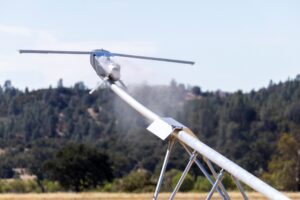
Germany’s Bundeswehr has conducted a pioneering unmanned systems test at its Army Combat Training Centre in Saxony-Anhalt, with Rheinmetall’s LUNA NG reconnaissance drone playing a central role in demonstrating networked warfare capabilities.
The trial marked a significant step in validating drone swarm technology for modern combat operations. From initial target detection through to engagement, forces relied exclusively on unmanned platforms, including reconnaissance drones and loitering munitions, according to Rheinmetall.
Networked Operations
The German military knows the LUNA NG system as HUSAR (Highly Efficient Unmanned System for Medium-Range Reconnaissance). During the exercise, Rheinmetall integrated the platform with the Bundeswehr’s Command & Control Unmanned Management System (C2-UMS Bw), enabling it to operate alongside other drones and munitions in a coordinated network.
This integration allowed the drone to share real-time intelligence across the battlefield. Ground units received comprehensive situational awareness through high-resolution imagery and continuous sensor data transmitted from the aircraft.
Technical Performance
The LUNA NG demonstrated robust operational capabilities during the trials. The system sustained flight operations exceeding 12 hours and reached altitudes up to 5,000 metres while maintaining quiet operations at high altitude.
Rheinmetall reported the drone reliably executed short-notice tasking requirements, proving its reconnaissance effectiveness under demanding conditions. The platform’s endurance gives commanders extended surveillance windows over wide operational areas.
Accelerated Targeting
The exercise highlighted how networked unmanned systems compress the sensor-to-shooter timeline. By linking reconnaissance and strike platforms through digital networks, forces dramatically reduced the time needed to detect, identify, and engage targets.
Connected systems received both broad operational area status updates and precise target information through the C2-UMS Bw network. This data fusion provided commanders with an enhanced common operating picture unavailable through traditional methods.
Strategic Implications
The successful trial comes as militaries worldwide grapple with integrating drone swarm technology into conventional operations. While multiple nations are developing similar capabilities, few have tested fully autonomous target engagement cycles using only unmanned platforms.
The Bundeswehr’s approach emphasizes network integration over individual platform capability. By connecting multiple systems through standardized command and control infrastructure, German forces aim to create resilient, distributed intelligence and strike networks.
This methodology reflects lessons from ongoing conflicts where coordinated drone operations have proven decisive. Ukraine’s battlefield experience has accelerated Western military interest in unmanned swarm tactics and counter-drone defenses.
Next Steps
The training centre trial’s heavy emphasis on digitalization and networking suggests the Bundeswehr views these capabilities as foundational for future operations. Successfully demonstrating the complete kill chain using unmanned systems validates the operational concept behind Germany’s growing drone procurement programs.
As European NATO members expand their unmanned aerial capabilities, interoperability standards like those tested with C2-UMS Bw will prove critical for coalition operations. The ability to integrate different platforms from multiple nations into unified networks may determine effectiveness in future conflicts.
Source: Rheinmetall Press Release