Image: U.S. Marines via DVIDS
A joint federal exercise marks a significant step toward integrating directed-energy weapons into America’s national airspace framework.
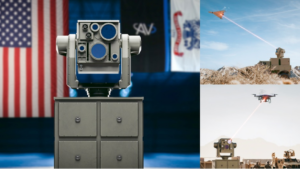
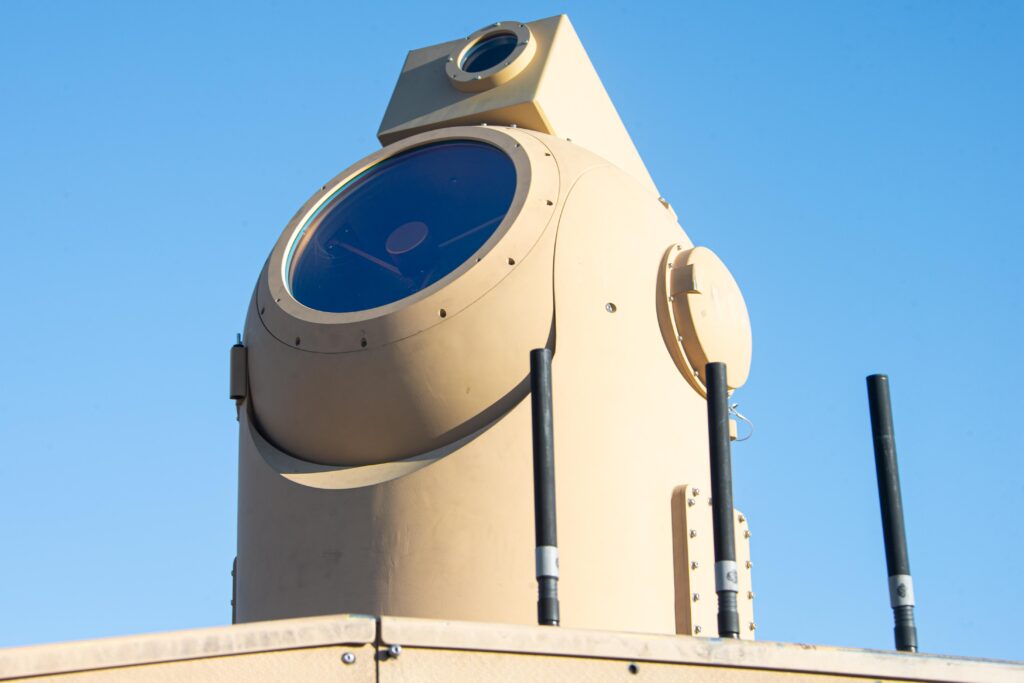
Joint Interagency Task Force 401 (JIATF-401) and the Federal Aviation Administration conducted a high-energy laser test at White Sands Missile Range, New Mexico, on March 7–8, advancing efforts to field counter-unmanned aerial system (C-UAS) capabilities across the United States.
The exercise forms part of a multi-year partnership between the Department of War and the FAA, aimed at ensuring directed-energy counter-drone technologies can operate safely within the national airspace. Planning for the test involved a broad coalition of federal stakeholders, with backing from the White House Task Force to Restore American Airspace Sovereignty.
A Growing Threat, A Federal Response
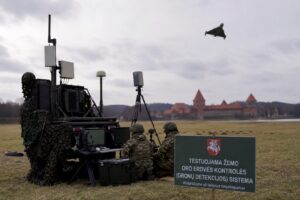
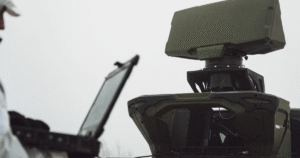
Unmanned aerial systems have emerged as a persistent security challenge for the United States, prompting a coordinated federal effort to develop and deploy effective countermeasures. JIATF-401 sits at the centre of that effort, tasked with delivering advanced C-UAS tools to military operators defending the homeland.
U.S. Army Brigadier General Matt Ross, Director of JIATF-401, described the test as a key milestone. “This is a critical step in making sure our warfighters have the most advanced tools to defend the homeland,” Ross said, according to JIATF-401. “By working hand-in-hand with the FAA and our interagency partners, we are ensuring that these cutting-edge capabilities are safe, effective, and ready to protect Americans from emerging drone threats.”
Ross added that rapid delivery of proven capability to operators remains the primary benchmark for success.
What the Test Will Measure
The White Sands event builds on decades of directed-energy testing by the Department of War. Previous trials generated data that refined system performance and deepened coordination between military and civilian aviation authorities.
This iteration targets specific FAA safety concerns. Testers will gather data on the laser’s material effects on aircraft surrogates, validate automated safety shut-off systems, and inform ongoing analyses of aircrew eye safety. Those findings are expected to support regulatory assessments needed before any operational deployment within shared airspace.
Broad Interagency Participation
The exercise drew observers and participants from across the federal government. Representatives from the Department of Energy, the National Nuclear Security Administration, the Department of Homeland Security, Customs and Border Protection, and the New Mexico National Guard attended alongside core partners.
Key institutional partners include White Sands Missile Range, the Army Program Acquisition Executive-Fires, Northern Command, and Joint Task Force Southern Border. Their involvement reflects the scale of coordination required to bring directed-energy weapons into lawful, safe operational use within the United States.
Strategic Significance
Directed-energy weapons, including high-energy lasers, offer distinct advantages over kinetic interceptors for counter-drone missions: low cost-per-shot, rapid re-engagement, and minimal risk of collateral debris. However, integrating such systems into civilian airspace presents complex regulatory and safety challenges, making FAA partnership essential to any domestic deployment pathway.
The White Sands test represents a tangible step toward resolving those challenges — moving laser-based C-UAS from controlled test ranges toward potential fielded use along U.S. borders and critical infrastructure.
Source: U.S. DoW Press Release