Image: Lockheed Martin
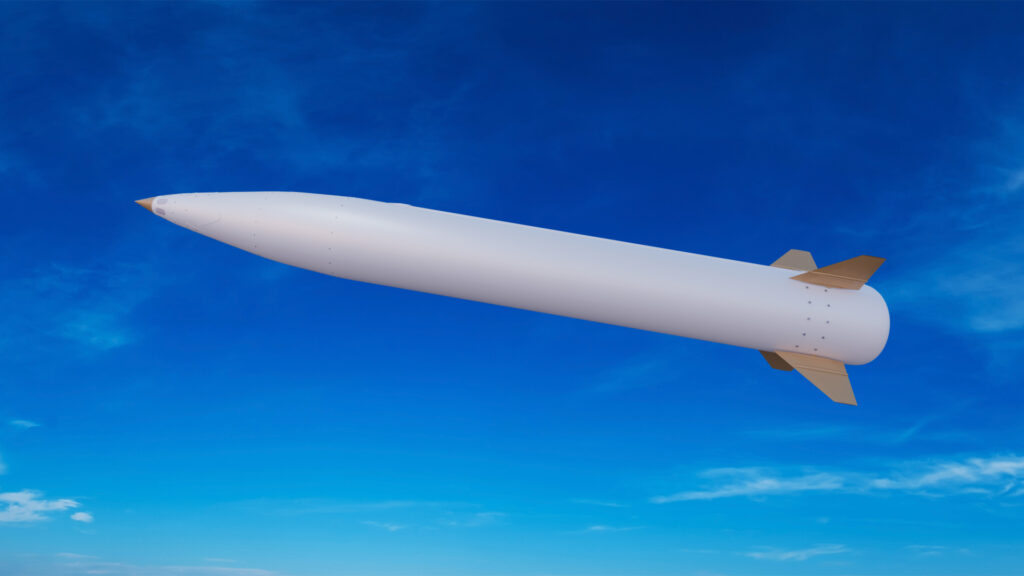
The U.S. Army’s long-range fires programme crossed a significant threshold after Lockheed Martin successfully conducted the first flight test of the Precision Strike Missile (PrSM) Increment 2, validating a new multi-mode seeker and a maritime strike capability that broadens the weapon’s operational role.
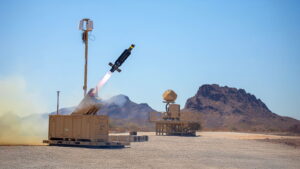
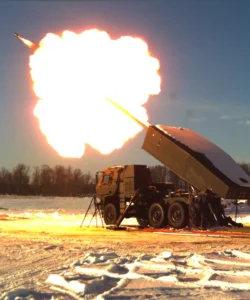
The test saw the missile launch from a High Mobility Artillery Rocket System (HIMARS) and fly approximately 350 kilometres. During the flight, PrSM Increment 2 deployed its protective covers and gathered a full suite of performance data. According to Lockheed Martin, the missile met all test objectives.
A New Seeker, A Wider Target Set
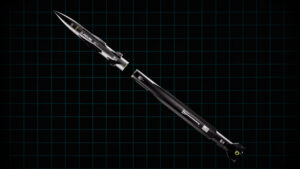
The defining feature of Increment 2 is its multi-mode seeker. Unlike the baseline PrSM — designed primarily for fixed land targets — Increment 2 can track and engage moving, time-sensitive threats. That shift is significant. Armies rarely face static targets in modern conflict. The ability to lock onto a relocating vehicle or vessel in real time closes a capability gap the service has long sought to address.
The maritime dimension is equally notable. PrSM Increment 2 adds a sea-strike option to a system previously confined to land-attack missions. Fired from land-based launchers, the missile can now contribute to sea-denial operations — traditionally the domain of naval forces or aircraft. That expands the Army’s role in joint, multi-domain operations and gives theatre commanders greater flexibility.
Integration Without Disruption
Increment 2 requires no new launcher hardware. The missile integrates directly with both HIMARS and M270A2 systems currently in service. That compatibility matters as much as the new seeker. New capabilities that demand new platforms stretch logistics chains and delay fielding. By working within the existing footprint, Lockheed Martin reduces those risks considerably.
Carolyn Orzechowski, vice president for Precision Fires Launchers and Missiles at Lockheed Martin, framed the milestone in terms of the Army’s stated requirements. “PrSM delivers the long-range capability the Army asked for to defeat moving land and maritime threats,” she said. “Our focused investment and accelerated delivery demonstrate our unwavering commitment to the Army customer.”
Development Pace and Programme Status
The programme is currently in the technology-maturation phase, with a Preliminary Design Review now underway. Lockheed Martin says it is applying modular design principles and digital engineering tools to compress the timeline from test to operational capability. Additional flight tests are scheduled for later this year.
Gaylia Campbell, vice president and general manager of Lockheed Martin Tactical Missiles, pointed to close coordination with the Army and its supplier network as central to that pace. “We’re moving quickly to deliver this enhanced capability to the warfighter faster without compromising performance or reliability,” she said.
Why It Matters
PrSM Increment 2 arrives as U.S. defence planners pay increasing attention to contested maritime environments — particularly in the Indo-Pacific, where the ability to threaten adversary naval assets from shore-based systems carries strategic weight. A land-launched missile that can strike moving vessels at ranges exceeding 300 kilometres offers Army commanders a credible contribution to theatre-level deterrence, without relying solely on naval or air assets.
The first flight test is a single data point, and operational fielding remains some way off. But the milestone confirms the programme’s technical direction and sustains momentum toward a capability the Army has sought for years.
Source: Lockheed Martin Press Release