Image: L3Harris
L3Harris Technologies and Shield AI have completed the first known integration of autonomous electronic warfare battle management with AI-driven mission software — a demonstration the companies say directly answers Pentagon demand for unmanned, coordinated command and control.
The two defence firms conducted a hardware-in-the-loop simulation combining L3Harris’ Distributed Spectrum Collaboration and Operations (DiSCO™) platform with Shield AI’s Hivemind autonomy software. The test, announced by L3Harris on 11 March 2026, showed unmanned systems detecting, analysing, and responding to electromagnetic threats in real time — without human intervention.
Fusing the Electromagnetic Picture
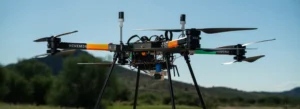
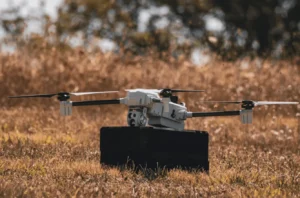
During the simulation, DiSCO gathered and fused threat intelligence from multiple unmanned aircraft systems (UAS). It generated a common operating picture of the electromagnetic spectrum. Hivemind-powered UAS then used that picture to autonomously identify safe operating zones and execute tactical maneuvers to achieve mission objectives.
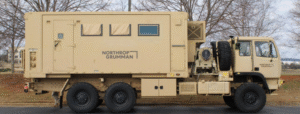
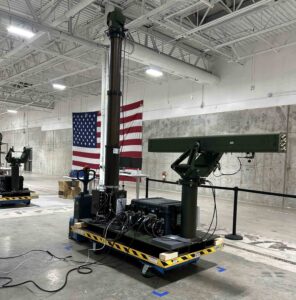
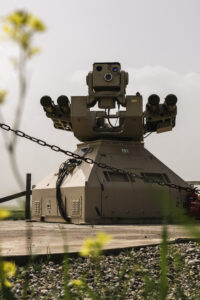
L3Harris also integrated its Green Wolf electronic warfare ground vehicle into the test. Green Wolf carries electronic attack and detection capabilities. A software-defined radio payload provided electronic support, alongside Shield AI’s UAS communications relay platform. All elements operated in an environment replicating real-world conditions.
Lauren Barnes, President of Spectrum Superiority, Communications and Spectrum Dominance at L3Harris, said the demonstration validated the company’s ability to deliver AI-driven, multi-domain solutions at speed. “By integrating autonomous decision-making with advanced battle management technology, we’re answering the Pentagon’s urgent call for coordinated command and control of multiple unmanned systems,” Barnes said.
Operating at Machine Speed
The demonstration reflects growing urgency within the US defence establishment to automate electronic warfare. The electromagnetic spectrum is increasingly contested, and decision cycles are compressing beyond human reaction times.
Christian Gutierrez, Vice President of Hivemind Solutions at Shield AI, said the integration proved that unmanned systems can sense and act across the spectrum without delay. “Electronic warfare moves at machine speed, and operational advantage depends on autonomy,” Gutierrez said.
The result carries broader implications for multi-domain operations. Coordinated autonomous EW operations could complicate adversary air defences, protect friendly communications, and suppress radar networks — all without exposing human operators to direct risk.
Live Flight Tests Planned
Both companies intend to move beyond simulation. They plan live flight testing later in 2026, using actual radio frequency emitters, platforms, and payloads for coordinated electronic warfare operations.
That next phase will stress-test what the simulation established: whether AI-driven EW autonomy holds up in complex, contested radio frequency environments. If successful, the programme could accelerate fielding of autonomous EW capabilities across US and allied air forces.
L3Harris, a major US defence electronics contractor, supplies a wide range of spectrum warfare, communications, and intelligence systems. Shield AI, a defence technology company, develops autonomous AI pilots and mission software for military UAS. The two firms did not disclose programme funding or any current government contracts tied to the effort.
Source: L3Harris Press Release