Image: BAE Systems
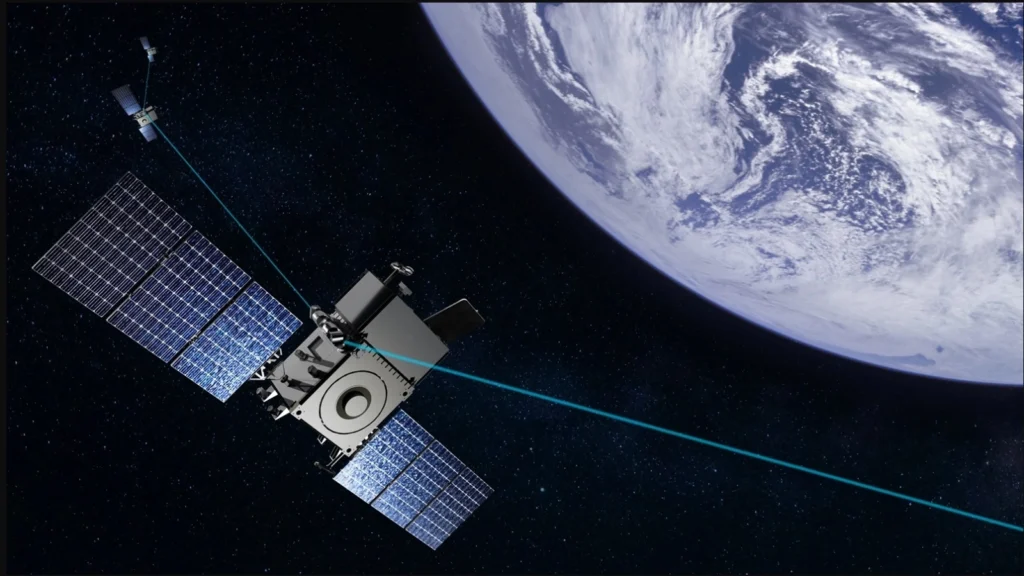
BAE Systems has completed the Preliminary Design Review (PDR) for a $1.2 billion U.S. Space Force satellite program designed to track advanced missile threats, including hypersonic glide vehicles.
The milestone advances the Resilient Missile Warning & Tracking – Medium Earth Orbit (RMWT MEO) Epoch 2 program under Space Systems Command (SSC). BAE Systems achieved the PDR in under nine months from contract award, according to the company.
Fast-Tracked by Digital Engineering
Speed was possible through high technology readiness level components, including BAE Systems’ proprietary TREK satellite bus. Model-based systems engineering and an established heritage in infrared optical payloads also accelerated the process.
“We have achieved a successful Preliminary Design Review with Space Force’s Space Systems Command, based on our collective use of digital modelling and simulation,” said Thai Sheridan, vice president and general manager of Military Space at BAE Systems.
Scope of the Program
BAE Systems serves as prime contractor. The company will design and build 10 spacecraft for the MEO Epoch 2 mission. It will also develop the ground system managing the constellation — covering mission management, command and control, and operational support.
The PDR establishes the technical foundation for both the satellite constellation and its ground command and control architecture.
Strategic Importance
The program addresses a growing priority within U.S. defence planning: resilient, space-based early warning against ballistic missiles and advanced threats. Hypersonic glide vehicles present particular tracking challenges for legacy satellite architectures, given their manoeuvrable flight profiles at lower altitudes than traditional ballistic trajectories.
MEO Epoch 2 forms part of a broader Department of Defence and Space Force effort to field more survivable, distributed missile warning constellations — reducing reliance on a small number of high-value geosynchronous satellites.
Sheridan said BAE Systems is “leading this integrated program from a mission planning level, payload and bus delivery, to launch, ground and operations support” — a scope that positions the company as a central player in the Space Force’s missile warning architecture for years ahead.
Source: BAE Systems press release