Image: Royal Air Force
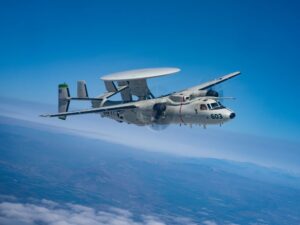
The Royal Air Force’s Air Command and Control Force is operating at the core of coalition air defence across the Broader Middle East, delivering continuous surveillance, real-time identification and multinational coordination across one of the world’s most congested and contested airspace environments, according to the Royal Air Force.
Drawing on lineage stretching back to the Battle of Britain’s Dowding System, the world’s first integrated radar network, the Air C2 Force today fuses information from advanced surveillance and early warning systems to maintain a recognised air picture around the clock.
A critical hub for coalition coordination
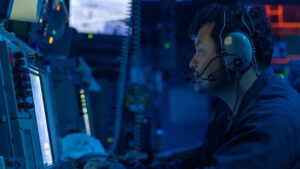
Operating through the Air Surveillance Control Detachment, the Force brings together specialist controllers, surveillance operators and tactical planners. The detachment maintains real-time communication with UK, NATO and partner-nation assets across the region. That connectivity ensures all coalition partners share a common air picture and can operate safely alongside one another.
The Force manages aircraft movement, supports air defence missions and works to reduce the risk of miscalculation in airspace where military traffic from multiple nations converges. Its role is explicitly defensive, designed to ensure proportionate and integrated coalition responses to any potential threat.
From routine QRA to high-tempo deployed operations
In the UK, Air C2 activity centres on Quick Reaction Alert duties, routine surveillance and training. Deployed operations demand significantly more. Situational awareness requirements are higher, identification calls are more frequent, and the pace of coalition coordination intensifies considerably.
Sergeant Matthew, currently serving in the region, experienced that shift first-hand. Previously focused on routine observation and daily reporting, he now serves as an Identification Officer, responsible for tracking and confirming every aircraft entering or leaving congested airspace. Recent operational events have pushed the role further still, drawing direct comparisons with the Force’s most demanding UK-based exercises.
“Our training back in the UK has enabled us to stay calm and collected, even during the most intense moments of this deployment,” he said.
His team’s rapid reporting feeds directly to airborne assets and commanders, sustaining the layered and collaborative approach to regional air defence that underpins the coalition mission.
Multi-domain integration across air, land and sea
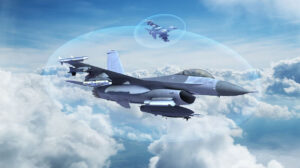
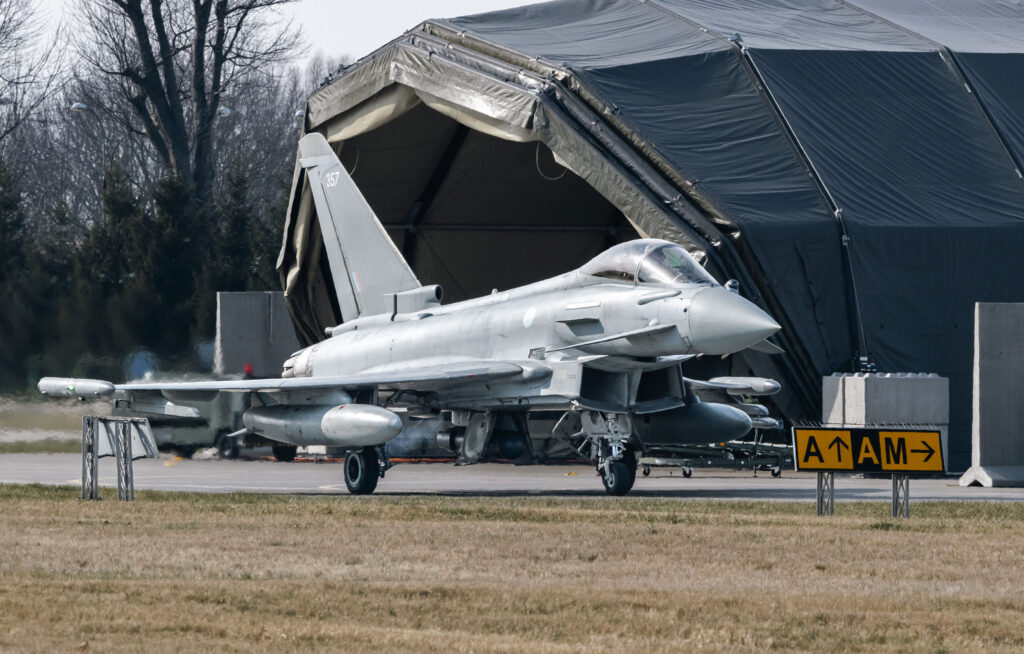
Beyond identification, the Air C2 Force provides real-time tactical control to aircraft on the mission, including the Eurofighter Typhoon and F-35B. Controllers integrate with land and maritime assets to sustain a unified, multi-domain defensive posture across the theatre.
Flying Officer Oliver, a Deployed Weapons Officer who recently rotated back from the Falkland Islands, said the role had grown in scope significantly. “This role has evolved into planning and coordinating with NATO partner nations with the same interests, working as a coalition force to meet our objective of the defence of Cyprus,” he said. He noted that the scale of coalition integration in the Middle East, spanning air, land and maritime partners, exceeds anything he had previously encountered in complexity and operational tempo.
Sergeant Sam, a Weapons Controller with the detachment, described an environment that demands constant integration across all domains. “It’s a fast-paced environment, integrating with both land and maritime assets to achieve an overall mission,” he said. His work, alongside that of colleagues across the detachment, directly sustains the safety and effectiveness of coalition air activity across the region.
Quiet professionals, outsized impact
Much of the Air C2 Force’s work takes place away from public attention. There are no weapon releases and no visible kinetic effects. Yet the Force’s contribution touches every coalition mission that transits the region’s airspace. By fusing surveillance data, maintaining tactical control and enabling multinational cooperation, it underpins the safe and lawful use of airpower across the Middle East.
The Air C2 Force’s deployed mission reflects a broader reality of modern coalition warfare: that control of the air domain depends as much on communication, coordination and trained human judgement as on the platforms that fly through it.
Source: Royal Air Force