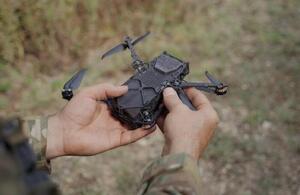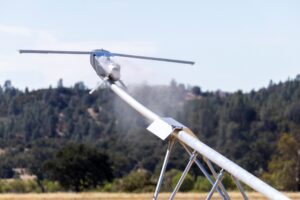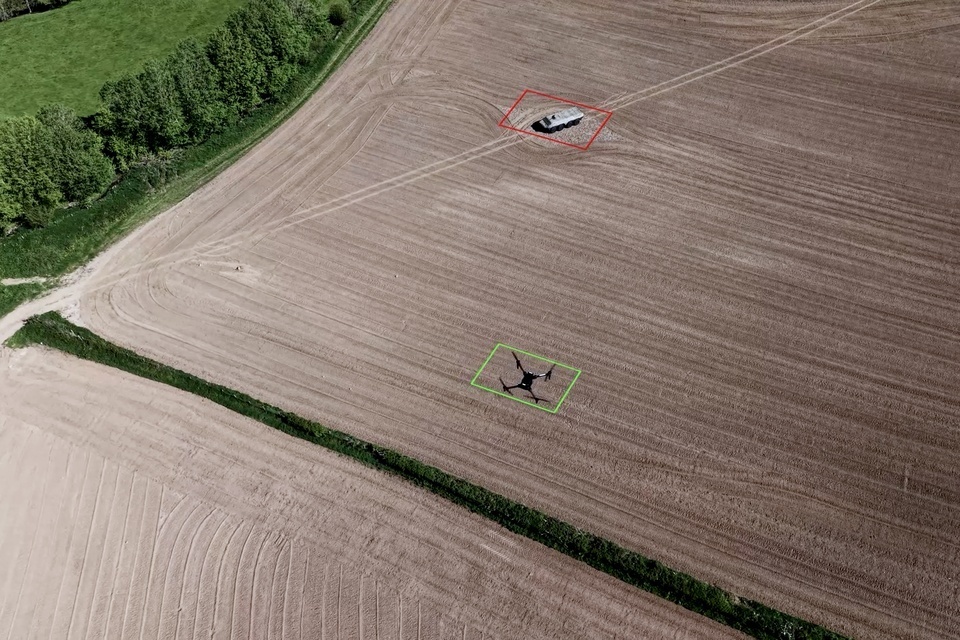
The British Army has successfully trialled a drone swarm in a realistic military environment, marking a significant advance in the UK’s autonomous systems capability, according to a recent Ministry of Defence statement.
The Defence Science and Technology Laboratory (Dstl) delivered Phase 1 of the Software Defined Swarms Concept Demonstrator in partnership with Army Headquarters and industry. The work builds on joint activity under AUKUS Pillar 2.
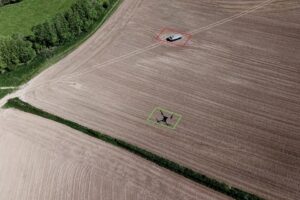
Dstl’s Land Systems and Autonomy Programme teams ran the UK’s first high technology readiness, collective control swarming drone demonstrations. Two industry-led systems were tested: one from BlueBear, a SAAB company, and another from the Disruptor Group, a UK consortium led by Applied Intuition. Both faced representative battlefield tasks in operational conditions.
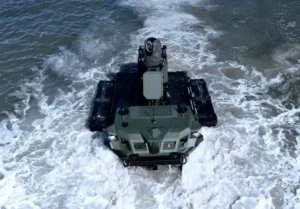
Although the trials used uncrewed aerial systems, the underlying technology could extend to uncrewed ground vehicles and surface vessels. Open architectures will let the system adapt as threats and technology evolve, a lesson reinforced by the conflict in Ukraine.
The project draws on more than a decade of Dstl research into AI, autonomy and swarming. It has produced a Swarm Capability Test Bed, now used by the Army’s Experimentation and Trials Group for live flying trials. The Army has completed eight weeks of experimentation with eight uncrewed aerial vehicles, with further trials planned through 2026 and 2027.
Dstl Land Systems Programme Manager Richard commented: “The team has demonstrated what true partnership can achieve, uniting technical excellence, operational insight and strategic coherence.”
Brigadier Kieran Sheldon, Head of Military Capability Plans at Army Headquarters, added the technology offers “significant potential” to accelerate adoption of uncrewed and swarming systems, boosting fighting power through lower-cost, coordinated capabilities.
Learn more on the UK MoD website