Image: Rheinmetall
Rheinmetall has secured another significant contract in Europe’s rapidly expanding short-range air defence market, after the Dutch Ministry of Defence placed an order for a two-digit number of Skyranger mobile air defence systems for the Netherlands Armed Forces. The deal, valued in the high hundreds of millions of euros, underscores growing NATO investment in countering emerging aerial threats such as drones, cruise missiles and loitering munitions.
According to Rheinmetall, deliveries of the Skyranger systems are scheduled to begin at the end of 2028, with final handover planned before the end of 2029. A substantial portion of the programme’s industrial work will be carried out in the Netherlands, supporting local defence industry participation and supply chains.
Flexible Configuration for Mobile and Static Defence
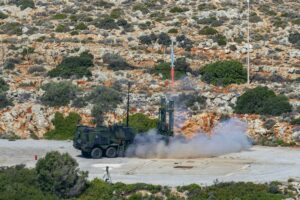
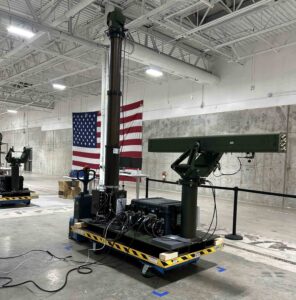
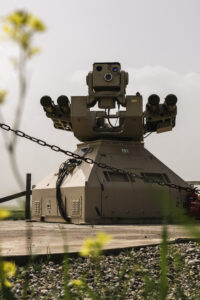
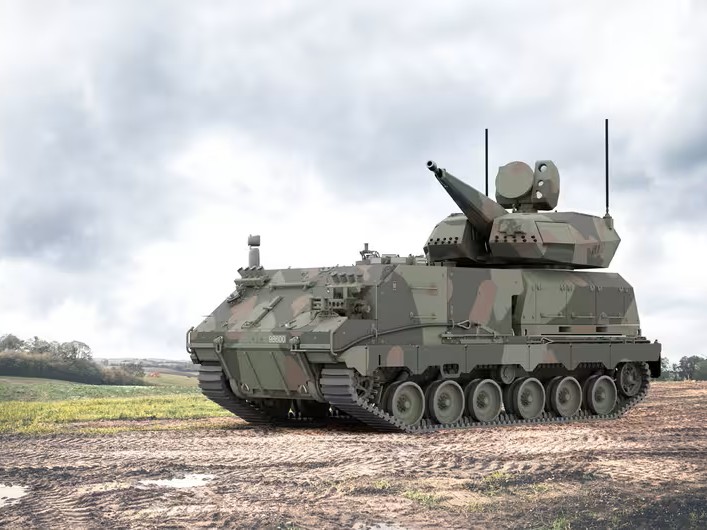
The order covers Rheinmetall’s Skyranger weapon platforms, each built around the standard Skyranger 30 air defence turret combined with a lower mounting system. This configuration allows the turret to be integrated onto the customer’s armoured combat support vehicles for mobile operations, or to be deployed independently in a stationary role from the ground.
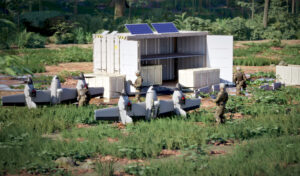
In addition to the weapon platforms, the Dutch contract includes tactical-level command and control nodes and hooklift transport systems to enable purely stationary deployment. Rheinmetall will also integrate the Skyranger systems into the Netherlands’ existing air defence architecture, ensuring interoperability with current sensors and command networks.
The package further includes classroom-based simulators for training and a comprehensive integrated logistics support arrangement, covering maintenance, sustainment and lifecycle support.
Addressing Short-Range Air Defence Gaps
The Skyranger 30 is designed to provide short- and very short-range air defence (SHORAD and VSHORAD), an area that has gained renewed urgency following Russia’s invasion of Ukraine and the widespread use of unmanned aerial systems on the modern battlefield. European armed forces are increasingly prioritising layered air defence capable of protecting manoeuvre forces and critical infrastructure against low-flying and small aerial targets.
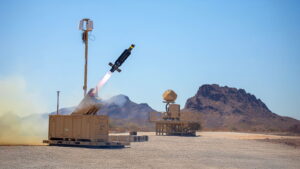
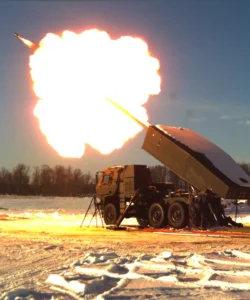
Rheinmetall describes the Skyranger 30 as a balanced solution combining mobility, protection, flexibility and precision. The turret is armed with a 30 mm x 173 KCE revolver cannon and incorporates onboard sensors, including a tracking radar. The modular design allows for future growth, including the integration of surface-to-air guided missiles as additional effectors.
A key feature of the system is its programmable airburst ammunition, which detonates at a pre-set point in space and is particularly effective against small, agile targets such as drones and swarming unmanned systems.
Networked and Autonomous Operations
The Skyranger turret’s high elevation range, fast reaction times and modern sensor suite enable both autonomous engagement and fully networked operations within a wider air defence system. This flexibility supports deployment alongside mechanised units or in static defence roles, depending on mission requirements.
Oliver Dürr, Managing Director of Rheinmetall Air Defence, said the order reflected confidence in the company’s technology and experience. “This latest order consolidates Rheinmetall’s position as the global market leader in the field of gun-based air defence,” he said, according to Rheinmetall. He added that the Dutch configuration—capable of both highly mobile and stationary operations without a dedicated carrier vehicle—is unique so far, noting that another NATO member has already expressed interest in a similar setup.
The Dutch procurement adds to Rheinmetall’s growing list of Skyranger customers and highlights a broader trend among European NATO members to rebuild and modernise close-range air defence capabilities in response to evolving threat environments.
Source: Rheinmetall Press Release