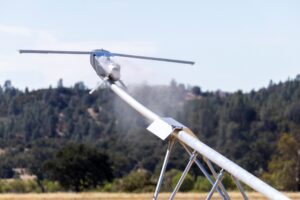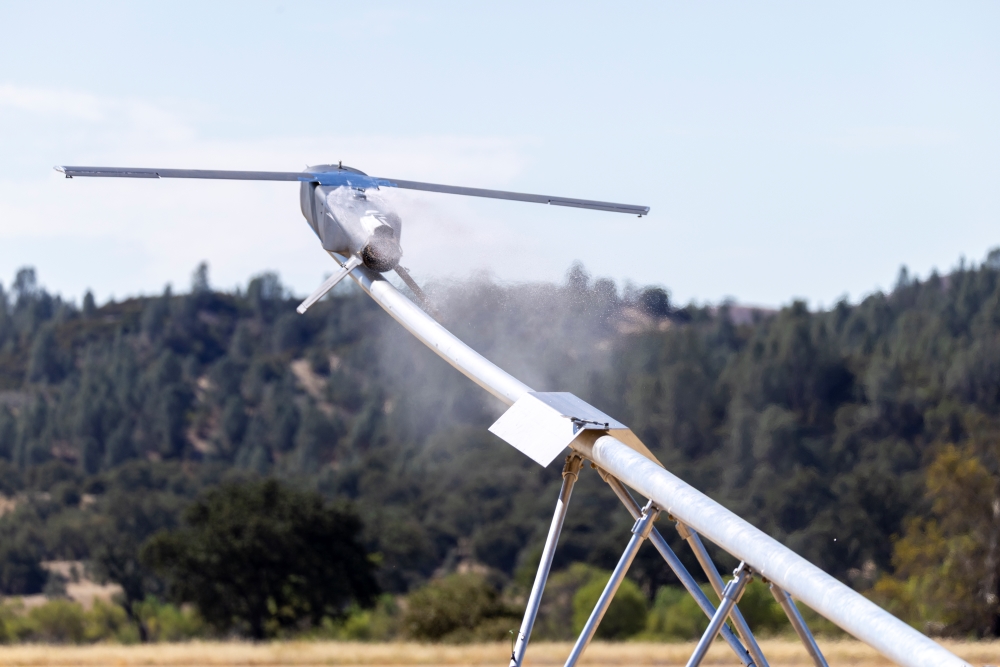
Northrop Grumman has successfully tested quantum sensing magnetic navigation on its Lumberjack uncrewed aircraft system, achieving the milestone just one month after setting the objective, according to a recent Northrop Grumman announcement.
The company worked with SandboxAQ to integrate the technology into Lumberjack, a Group 3 platform that already carries an electronic warfare suite, tactical data links, and intelligence, surveillance and reconnaissance capabilities alongside precision strike systems. Quantum sensors detect minute variations in the Earth’s magnetic field, allowing the aircraft to navigate accurately when GPS signals are jammed or unavailable.
During the flight test, the system resisted jamming and performed reliably in GPS-denied conditions, including over open water. Lumberjack also demonstrated recoverability, launching, flying and landing multiple times to support military training requirements. Its modular design lets Northrop Grumman combine mission kits with partner technologies, giving customers a flexible route to meeting mission needs affordably.
Program Manager Max Schuster commented that Lumberjack demonstrates “best-of-breed” technology drawn from across industries. He added that the rapid integration timeline has moved the programme “from vision to operational reality” and that quantum sensing strengthens mission capability in GPS-denied environments.
Lumberjack, a one-way-attack drone, went from design to first flight in under 14 months and has since undergone repeated flight tests to expand its capabilities. Northrop Grumman serves as mission systems integrator, while ESAero Inc., a subsidiary of AV Inc., supplies the air vehicle and its systems integration.
The demonstration underlines growing industry focus on GPS-independent navigation, as militaries increasingly plan for contested electromagnetic environments where satellite positioning cannot be guaranteed.
Learn more on Northrop Grumman’s website