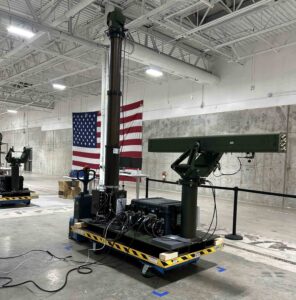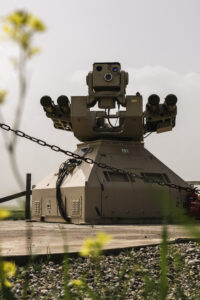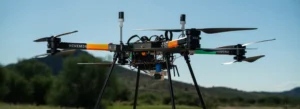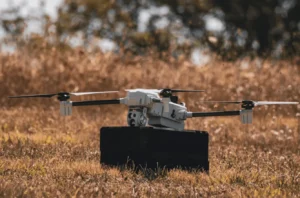
Image: U.S. Army
The United States and United Kingdom have signed a Joint Declaration of Intent to establish common data standards for counter-unmanned aerial system technologies, marking a significant advance in allied military interoperability.
The agreement, announced by the U.S. Department of the Army and the UK Ministry of Defence, was led by Joint Interagency Task Force 401 (JIATF-401) — the U.S. body responsible for fielding counter-drone capabilities. It directly targets one of the most persistent obstacles to integrating C-UAS technology: incompatible data formats across allied systems.
By aligning on a common standard, both nations aim to enable seamless data sharing between their forces, improve sensor fusion, and accelerate delivery of new capabilities to frontline units.
A Direct Signal to Industry
JIATF-401 will embed the new data standard requirements into its marketplace procurement criteria. The move creates a clear commercial incentive: vendors who adopt the standard gain a faster route to fielding their systems with U.S. and allied forces.
Brigadier General Matt Ross, director of JIATF-401, said the absence of common standards had long hindered integration of the best available technologies. “By establishing these standards, we are sending a clear signal to industry,” Ross said. “Vendors who adopt these standards will find a more direct path to getting their capabilities into the hands of our warfighters.”
The marketplace approach reflects a broader push to streamline acquisition and reduce friction between technology developers and the military.
Alliance Expansion on the Horizon
Secretary of the Army Dan Driscoll framed the declaration as part of a wider modernisation and alliance-building effort. He confirmed plans to extend the standards framework to five additional nations in the coming weeks. By this summer, Driscoll said, up to 25 countries — alongside the entire U.S. local, state, and federal ecosystem — could be purchasing from the JIATF-401 marketplace.
“By establishing common standards with key allies like the United Kingdom, we not only enhance our collective security but also strengthen our defence industrial base,” Driscoll said. “This initiative will accelerate our ability to deploy the most effective C-UAS capabilities to protect our soldiers.”
The ambition to expand the framework to a coalition of 25 nations would represent a substantial shift in how allied forces procure and integrate counter-drone systems.
UK Perspective: Speed and Interoperability
Colonel Anna Scott, British Army Advisor to the Secretary of the Army, called the agreement a milestone in technical interoperability. “In the rapidly evolving world of counter-UAS, the ability to share data at pace is essential,” Scott said. She added that the commitment to common standards would benefit the broader C-UAS enterprise, including industry partners, enabling fully interoperable capabilities delivered “at the speed of relevance.”
Scott’s remarks reflect longstanding UK-U.S. cooperation on defence technology, and suggest London views the agreement as more than procedural — it has operational urgency.
Context: Why C-UAS Standards Matter
The proliferation of unmanned aerial systems on modern battlefields — from Ukraine to the Middle East — has intensified demand for effective, interoperable counter-drone solutions. Fragmented data standards across allied systems have slowed joint operations and complicated procurement. This agreement, according to the U.S. Army, is designed to directly address that gap.
JIATF-401’s role as the lead body for this initiative positions the task force as a central node in shaping how allied nations collectively respond to the drone threat — not only militarily, but industrially.