Image: Lockheed Martin
The Pentagon has handed Lockheed Martin a major contract to ramp up output of its premier air defence interceptor, as Washington moves to rebuild missile stockpiles and strengthen allied defences.
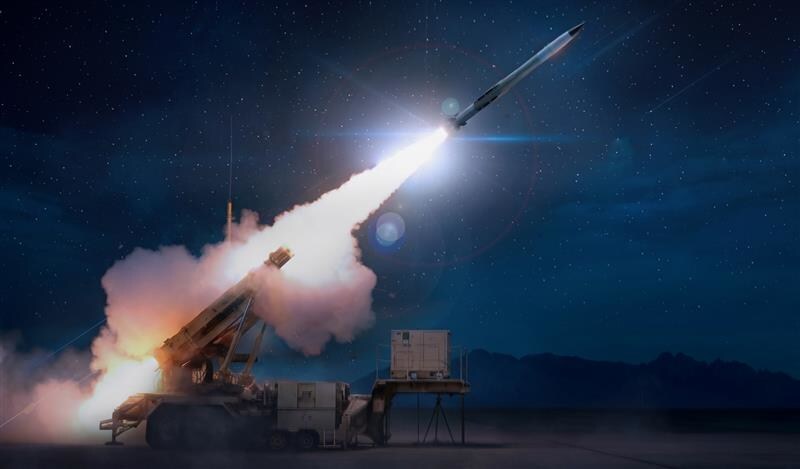
The U.S. government has awarded Lockheed Martin a $4.7 billion undefinitized contract action (UCA) to accelerate production of the PAC-3 Missile Segment Enhancement (MSE) interceptor. According to Lockheed Martin, the contract will enable the defence giant to deliver record numbers of the combat-proven missile to American and allied forces this year.
A Framework Built for Speed
The award builds on a framework agreement signed with the Department of War on January 6, under the administration’s Acquisition Transformation Strategy. That strategy aims to compress procurement timelines and scale up munitions output at pace with evolving global threats.
Lockheed Martin was the first defence contractor to sign a framework agreement under the strategy. The company has since committed to tripling PAC-3 MSE production capacity, with further agreements to quadruple output of Terminal High Altitude Area Defence (THAAD) interceptors and Precision Strike Missiles (PrSM).
Combat-Proven Capability
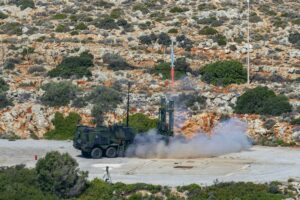
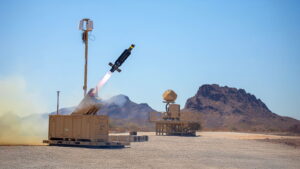
The PAC-3 MSE is widely regarded as the world’s most advanced hit-to-kill air defence interceptor. It is designed to defeat ballistic missiles, cruise missiles, and advanced aircraft across a broad threat spectrum. The system has seen active operational deployment, including in Operation Epic Fury, where it has defended both forces and critical infrastructure.
Tim Cahill, president of Lockheed Martin Missiles and Fire Control, emphasised the urgency driving the programme. “We are answering the nation’s call with urgency and partnering with the DoW to accelerate PAC-3 MSE production faster than ever before,” he said. “Our investments in our facilities, workforce and supply chain ensure we can deliver at scale and with speed.”
Industry Investment Backs Government Funding
Lockheed Martin has invested more than $7 billion since President Donald Trump’s first term to expand capacity for priority defence systems. Approximately $2 billion of that total targets munitions production acceleration directly.
The company recently broke ground on the Munitions Acceleration Center, a new facility designed to train future manufacturing workers. It also announced the opening of the Rapid Fielding Center, which streamlines development, testing, and prototype production of next-generation systems for U.S. government customers.
Jobs and Industrial Base
The contract carries significant domestic economic weight. Lockheed Martin says the programme supports tens of thousands of American jobs across manufacturing, engineering, and skilled trades. Expansions span multiple states, reinforcing the broader U.S. defence industrial base at a time when Washington is pushing suppliers to reduce dependence on foreign components and sustain long-term surge capacity.
Strategic Context
The contract reflects a wider shift in U.S. defence acquisition policy. Concerns over depleted stockpiles, highlighted by Western support to Ukraine and rising tensions in the Indo-Pacific, have pushed the Pentagon to prioritise high-demand interceptors. PAC-3 MSE batteries are deployed by multiple NATO allies and key partners including Japan, South Korea, and Saudi Arabia, making sustained production a matter of both national and collective security.
The UCA structure allows work to begin immediately while final contract terms are negotiated, a mechanism Washington increasingly uses when speed outweighs the need for a fully defined agreement upfront.
Source: Lockheed Martin