Image: US Army via DVIDS
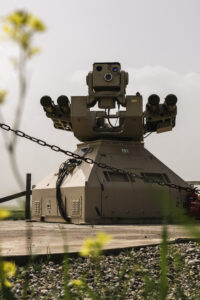
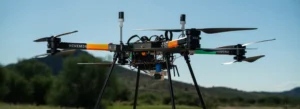
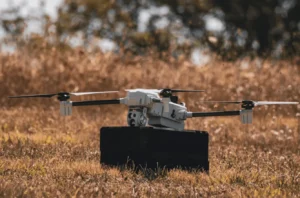
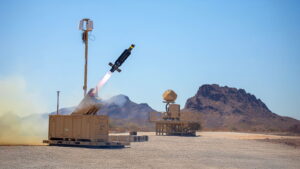
The U.S. Army has conducted an unprecedented live-environment exercise to assess how well military installations in the National Capital Region can detect and defeat hostile drones, according to the original report. The five-day event, held 17–21 November, brought together multiple services and civilian agencies to evaluate counter-unmanned aircraft systems (C-UAS) performance under conditions that mirror the dense, highly regulated airspace of Washington, D.C.
A First-of-Its-Kind Urban Airspace Stress Test
The exercise was designed in response to a June directive from Secretary of War Pete Hegseth calling for renewed “drone dominance” across U.S. forces. Army Lt. Col. Brian Reynolds, Chief of the Mission Assurance Division, and Lt. Col. Jesse Burnette, Joint Staff Director of Operations, planned the joint event in coordination with Joint Task Force–National Capital Region and the U.S. Army Military District of Washington.
Supported by the Air Force, Navy, Marine Corps, Coast Guard and local law enforcement, pilots launched drones from multiple locations around Fort McNair—including north of the post, east of the installation, and an insider-threat scenario near the National War College. Hains Point, situated between the Potomac River and Washington Channel, served as an additional simulated “invasion” point.
“This is the first time we’re aware of where these systems were tested in the actual conditions they’re meant to operate in—not a remote range,” Reynolds said, according to the source.
Testing Day and Night, Across Multiple Installations
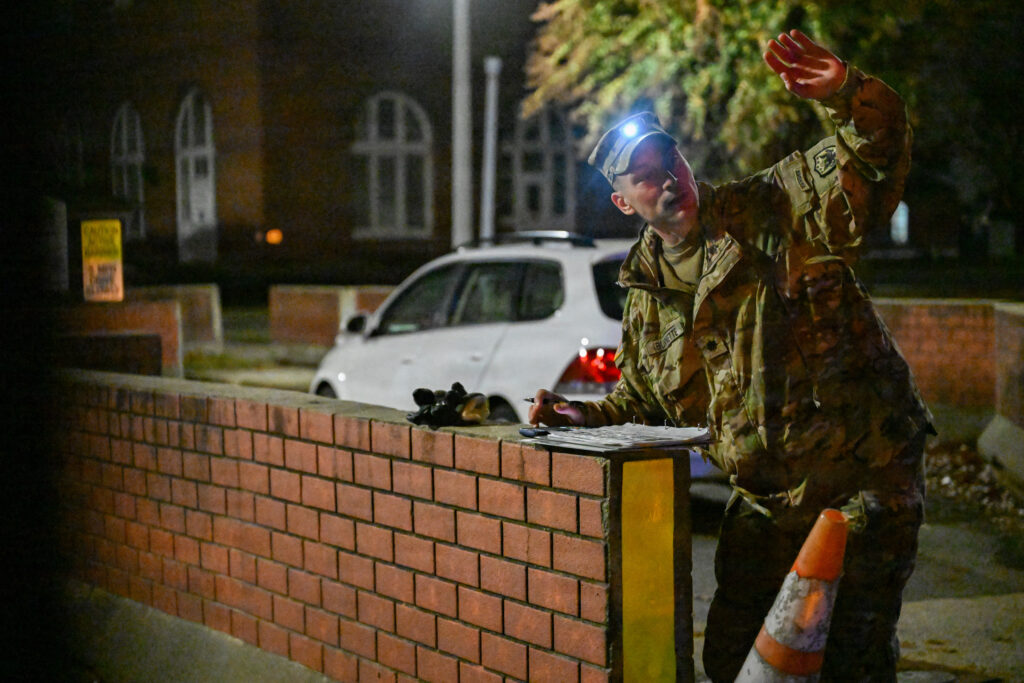
During daylight hours, pilots flew drones in hover, orbit and penetration profiles designed to probe detection networks across participating sites. At night, the team repeated the flights to evaluate sensors, handheld mitigation devices and police support capabilities under reduced visibility.
Flight windows ran from roughly 9:30 a.m. to 3:00 p.m., then again from 2:00 a.m. to 5:00 a.m., allowing testers to measure whether Fort McNair, Joint Base Anacostia–Bolling and the Washington Navy Yard could identify and respond to UAS incursions around the clock.
The data collection effort required extensive interagency coordination, including approvals from the Federal Aviation Administration and the Transportation Security Administration due to the tightly controlled airspace surrounding the capital.
Building Toward a Larger 2026 Counter-UAS Effort
Reynolds said the results will inform a more expansive exercise planned for January–May 2026, potentially involving additional bases across the region. The goal is to identify vulnerabilities in the War Department’s counter-UAS posture and improve “air domain awareness”—the ability to track, characterize and, if necessary, neutralize aerial threats.
The stakes are high. Drone attacks have caused significant casualties in the Ukraine war and have challenged militaries from Europe to the Middle East. Burnette noted that small UAS—cheap, proliferating, and increasingly lethal—have “stymied countries from Denmark to the U.S.” and remain a pressing security concern for Western nations.
A Complex Testbed at the Nation’s Front Door
Washington’s unique environment—dense urban development, diverse infrastructure, and proximity to Ronald Reagan Washington National Airport—makes it one of the most complex airspaces in the United States. More than 40 federal, state, local, tribal and territorial agencies operate in the region, offering a realistic test of interagency coordination.
“If you can solve this problem here, you can probably solve it anywhere,” Burnette said.
Reynolds added that the broader effort aims to break down stovepipes across agencies: “We’re sharing early warning systems and integrating them into a common operational picture.”
As modern conflicts showcase the rising threat of small drones, U.S. military leaders hope the lessons from Washington’s constrained airspace will help shape future counter-UAS doctrine nationwide.
Source: DVIDS News