Image: U.S. DoW
Senior U.S. defence officials have told Congress the country must urgently upgrade its entire nuclear arsenal to deter both China and Russia simultaneously — a challenge without modern precedent.
Robert Kadlec, Assistant Secretary of the Army for Nuclear Deterrence, Chemical and Biological Defense Policy and Programs, testified before the House Armed Services Committee’s Strategic Forces Subcommittee on March 17, warning that Washington faces a decisive strategic moment.
“U.S. strategy is at a critical inflection point,” he said.
Two Adversaries, One Arsenal
China’s rapid and large-scale nuclear expansion — what Kadlec called a strategic “breakout” — has fundamentally altered U.S. deterrence planning. For the first time, American nuclear forces must be sized and postured to credibly deter both Beijing and Moscow at once.
Compounding that shift, the New Strategic Arms Reduction Treaty (New START) with Russia expired in February. The agreement had capped strategic warhead numbers on both sides. No successor deal is in place.
Kadlec warned lawmakers that adversaries could attempt coordinated aggression across multiple theatres, deliberately stretching U.S. forces. American nuclear posture, he argued, must hold firm even while the country is engaged in a major conventional conflict elsewhere.
“Our force structure posture and nuclear strategy must be robust enough to deter both peers simultaneously, even if we were to be engaged in a major conventional conflict with one,” he told the subcommittee.
Credibility Over Numbers
Kadlec was clear that numerical parity with Russia and China combined is not the objective. What matters, he said, is maintaining a force capable of imposing unacceptable costs on either adversary — under any scenario, in any theatre.
“Neither [adversary] should believe they can exploit a crisis elsewhere for their own gain,” he said.
A Triad Under Pressure
Modernising all three legs of the nuclear triad simultaneously is placing severe strain on defence budgets and the industrial base. The land, sea, and air components are all mid-transition — and Kadlec told lawmakers there is no margin for delay.
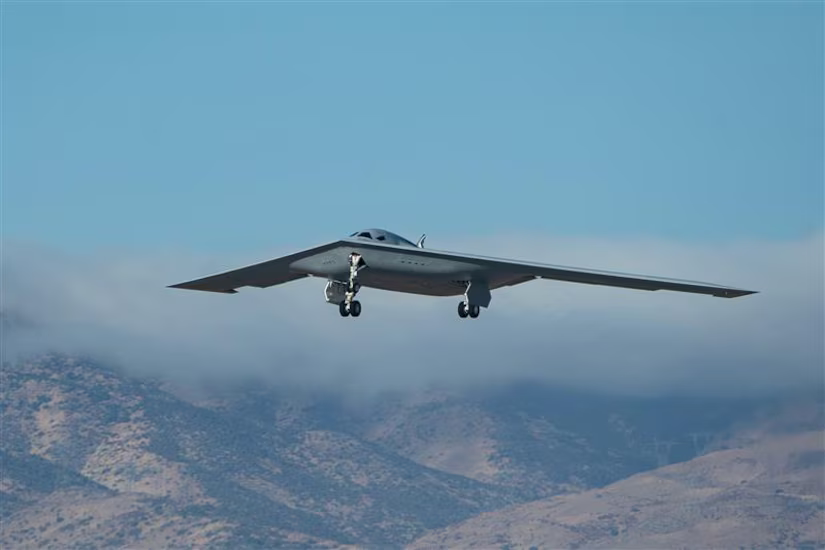
Programmes he identified as critical include the Sentinel ICBM, which will replace the ageing Minuteman III; the Columbia-class ballistic missile submarine; the B-21 Raider stealth bomber; the Long-Range Standoff (LRSO) cruise missile; and the nuclear-armed Sea-Launched Cruise Missile (SLCM-N).
“The transition from our legacy systems to a modernised triad occurs during a period of maximum geopolitical risk,” Kadlec said. “There is no room for error.”
A Direct Appeal to the Hill
Kadlec closed with a stark appeal to Congress. The cost of modernisation is substantial — but the cost of inaction, he argued, is far higher.
“The luxury of assuming a single major adversary is gone,” he said. “The cost of modernising our nuclear deterrent is significant, but the cost of failing to do so is immeasurably greater.”
He urged sustained congressional support to ensure the United States retains a credible deterrent in what he described as a “new, more dangerous era.”
You can read more on the U.S. DoW website