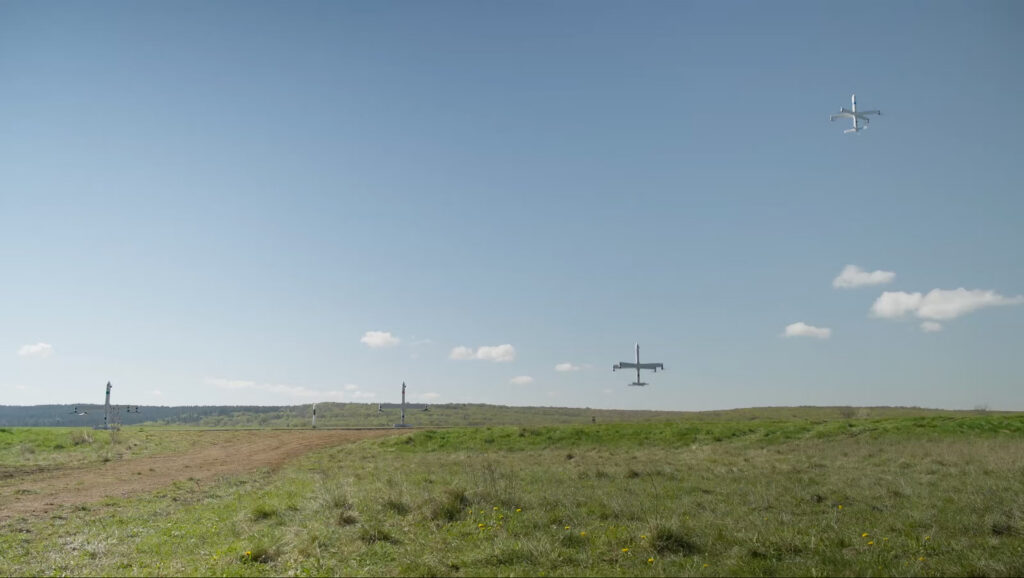
Image: STARK Defence
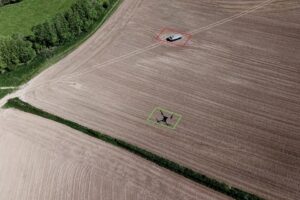
The Bundeswehr has successfully progressed trials of AI-enabled drone swarm technology, integrating loitering munitions, reconnaissance platforms, and command and control software in a combined recce-strike exercise.
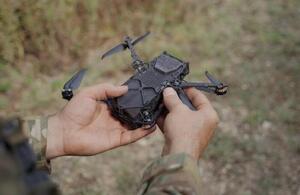
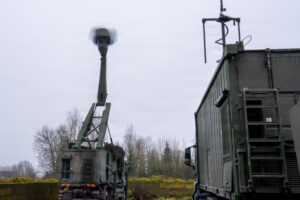
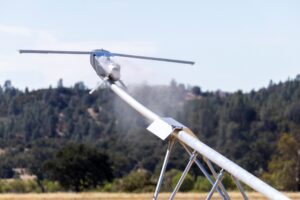
Defence company STARK participated with its Virtus loitering munition and Minerva command and control (C2) software, while Quantum Systems contributed its Vector reconnaissance drone. Together, the systems performed reliably under simulated battlefield conditions, as per a recent press statement from STARK.
The central objective was to reduce the time between target detection and engagement. By linking reconnaissance assets directly to strike platforms through integrated C2 software, the exercise tested whether AI-enabled systems could compress this critical decision cycle. STARK and its partners are targeting a scalable, operational capability for the Bundeswehr by 2027.
STARK’s Virtus loitering munition uses a modular design approach, enabling rapid configuration for different operational scenarios and seamless integration into existing Battle Management Systems (BMS).
Senior Vice President Josef Kranawetvogl of STARK commented: “Networked, AI-enabled weapon systems are already decisive for the battlefield today. Together with our partners, we are working to seamlessly integrate reconnaissance and strike capabilities in order to close critical capability gaps.”
The exercise reflects the Bundeswehr’s growing focus on shortening sensor-to-shooter timelines through automation and networked uncrewed systems. Germany’s armed forces have faced sustained pressure to modernise since Russia’s full-scale invasion of Ukraine in 2022 reshaped European security priorities.
STARK positions itself as a key industrial partner for the rapid scaling and operational readiness of unmanned systems. With a 2027 fielding target, the programme represents one of Germany’s more concrete steps toward deploying AI-enabled swarm capability at scale.
Read More on Stark’s website