Image: Lockheed Martin
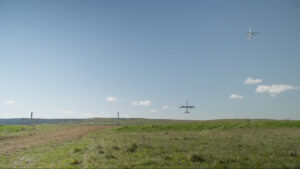
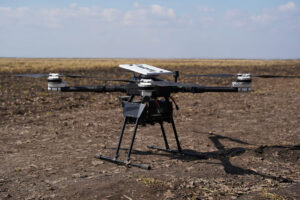
Lockheed Martin has successfully intercepted a Group 3 one-way attack drone using a Joint Air-to-Ground Missile fired from its GRIZZLY containerised launcher, marking the first engagement of its kind and demonstrating a rapid, mobile counter-drone capability built to operate with minimal infrastructure.
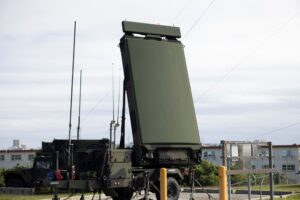
The intercept used the Sanctum Counter-Unmanned Aerial System battle manager alongside Fortem R-40 radars. The sensors detected and tracked the hostile UAV, Sanctum’s mission management software processed the engagement, and GRIZZLY fired the JAGM missile to neutralise the target.
The full kill chain, from hardware-in-the-loop integration through to live-fire testing, completed in fewer than 45 days, according to Lockheed Martin. The company says the timeline reflects its capacity to move from concept to operational demonstration at speed, a critical attribute as drone threats continue to evolve.
System Architecture
GRIZZLY builds on existing prototype architecture, allowing operators to field the Sanctum C-UAS system without extensive logistics or fixed infrastructure. Its containerised design supports mounting on ground sites and maritime platforms, giving it operational flexibility across theatres. Wireless communication links the radars, battle management software and launcher together, enabling rapid repositioning with minimal reconfiguration. The system carries eight rounds, supports toolless reload and uses low-cost commercial sensors, keeping sustainment costs down while maintaining sustained firepower.
JAGM Integration
The JAGM’s dual-mode seeker combines semi-active laser and millimetre-wave radar guidance, providing a cost-effective effector deployable across ground and maritime domains. Lockheed Martin says the missile sits within a broader layered defence posture, protecting forward operating bases and high-value assets against Group 1 through Group 4 UAV threats via the Sanctum kill web.
Industry Comment
Randy Crites, Vice President and General Manager of Lockheed Martin Advanced Programs, said the test showed how GRIZZLY’s proven launch architecture and Sanctum’s battle manager can be brought together on an accelerated timeline. “This test demonstrated a modular, affordable point-defence solution that can be quickly scaled and deployed across multiple domains to counter evolving threats,” he said.
Paul Lemmo, Vice President and General Manager of Lockheed Martin Sensors, Effectors and Mission Systems, noted the kill chain can operate on a standalone basis or integrate with higher-echelon command and control systems through the Sanctum mesh network. “This shows our commitment to meet our customers’ toughest missions,” he added.
Background
The test comes as militaries worldwide contend with a sharp rise in low-cost one-way attack drones, weapons that have reshaped frontline warfare in conflicts including Ukraine and the Middle East. Group 3 systems, typically weighing between 25 and 600 kilograms with ranges exceeding 50 kilometres, pose a significant threat to forward-deployed forces and logistics infrastructure. The GRIZZLY and JAGM combination targets demand from land and naval operators for a deployable, affordable point-defence solution that requires no permanent installation, a requirement gaining priority across NATO member defence programmes.
Read more on Lockheed Martin’s website