Image: Hanwha
Hanwha Aerospace has secured a major production contract in Poland, agreeing to locally manufacture Chunmoo guided missiles under a deal worth about $4 billion, according to the Polish Armament Agency and Hanwha Aerospace.
The executive contract, signed on 29 December in Warsaw, covers the supply of CGR-080 guided missiles for Poland’s Homar-K multiple rocket launcher programme. It represents the third major executive agreement under the Homar-K framework, which forms a core element of Poland’s long-range fires modernisation effort.
Local production marks strategic shift
The agreement was concluded between the Polish Armament Agency and a consortium led by Hanwha WB Advanced System. The consortium combines Hanwha Aerospace with WB Electronics, one of Poland’s leading defence companies.
Under the contract, Hanwha WB Advanced System will manufacture the CGR-080 missiles at a dedicated production facility inside Poland. Deliveries are scheduled to begin in 2030.
The move signals a shift from procurement to domestic production, reflecting Warsaw’s broader push to build defence-industrial sovereignty amid heightened regional security pressures.
Missile capabilities and operational role
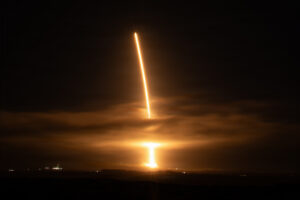
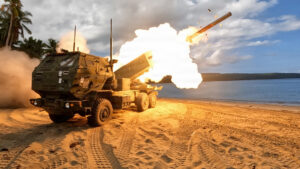
The CGR-080 is a 239 mm precision-guided missile designed for use with the Chunmoo multiple rocket launcher system. It has a stated range of 80 kilometres and a circular error probability of approximately 15 metres.
The missile uses a combined GPS and inertial navigation system. It will serve as the primary guided munition for Poland’s Homar-K launchers, the Polish variant of the South Korean Chunmoo system.
Poland has prioritised rocket artillery and long-range strike systems as it modernises its armed forces in response to Russia’s invasion of Ukraine and wider instability along NATO’s eastern flank.
Technology transfer and industrial impact
The contract includes provisions for technology transfer and the integration of Polish suppliers into the production chain. Officials from both countries described the project as a foundation for long-term industrial cooperation rather than a one-off purchase.
Hanwha Aerospace Chief Executive Jae-il Son said the agreement reflected growing trust between the two countries. “This contract is a milestone based on the trust between Hanwha and Poland,” he said, according to the company. He added that Hanwha intends to continue working with Polish industry to deliver both security and economic benefits.
Polish defence officials emphasised the importance of production independence. Deputy Prime Minister and Defence Minister Władysław Kosiniak-Kamysz said the agreement fulfilled a long-standing ambition within the Homar-K programme to localise manufacturing.
“By bringing together WB Electronics and Hanwha Aerospace, we are building a robust partnership with a trusted ally,” he said, according to Poland’s Ministry of National Defence.
High-level political backing
Senior Polish and South Korean officials attended the signing ceremony at the Polish Army Museum. Signatories included Major General Artur Kuptel, head of the Polish Armament Agency, Jae-il Son, and WB Group President Piotr Wojciechowski.
The event underscored the political weight behind the programme, with representatives from South Korea’s presidency, defence acquisition authorities, and its ambassador to Poland present.
Broader defence cooperation
The Chunmoo missile production deal builds on a wider surge in Polish-South Korean defence cooperation since 2022. Poland has ordered K2 main battle tanks, K9 self-propelled howitzers, and FA-50 light combat aircraft from South Korean suppliers.
For Hanwha Aerospace, local missile production strengthens its position in Europe’s expanding defence market. For Poland, the agreement advances its goal of pairing rapid military modernisation with a sustainable domestic defence industry.
Source: Hanwha Aerospace Press Release