Image: Lockheed Martin
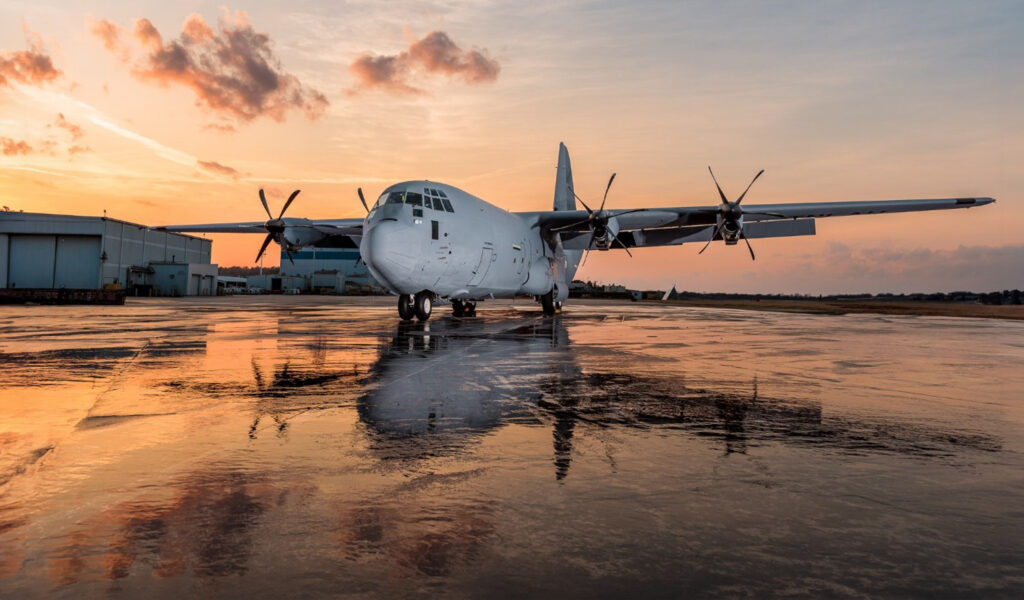
Lockheed Martin has secured a foreign military sale contract to provide advanced C-130J training devices and upgrades to the Royal Australian Air Force, with deliveries beginning in 2029.
The contract, awarded through Wright-Patterson Air Force Base, covers a significant package of simulation and training equipment. It includes two Weapon Systems Trainers, an Enhanced Integrated Cockpit Systems Trainer (EICS), a Loadmaster Part-Task Trainer, and upgrades to existing Virtual Simulation and Virtual Maintenance Trainers.
The deal deepens a defence partnership stretching back decades. The RAAF has operated C-130 variants since 1958 and currently flies 12 C-130J-30 Super Hercules aircraft from RAAF Base Richmond, home of No. 37 Squadron.
Expanding Fleet Drives Training Demand
Australia’s training requirements are growing alongside a major fleet expansion. In July 2023, Canberra formally acquired 20 additional C-130J-30 aircraft under a 2022 US Foreign Military Sale agreement that authorised the sale of up to 24 airlifters. The first new aircraft is expected to arrive in 2028.
The new training devices are built for concurrency with those incoming aircraft. That means updated capabilities can be fielded rapidly as each aircraft enters RAAF service, reducing gaps between delivery and operational readiness.
High-Fidelity Systems for Mission-Ready Crews
Lockheed Martin says the training devices feature cutting-edge graphics, motion cueing, and high-fidelity cockpit replication that closely mirrors the operational C-130J. The company’s position as original equipment manufacturer gives it direct access to the aircraft’s operational flight programme — an advantage it says translates into more authentic simulation.
Todd Morar, Lockheed Martin’s Vice President of Air and Commercial Systems, said the contract reflects an enduring partnership with the RAAF. “Our knowledge of the aircraft and its operational flight program enable us to provide the most authentic, mission-ready training tools available,” Morar said, “preparing Australian aircrews to master the aircraft on day one.”
Peter Ashworth, Director of Global Training Systems at Lockheed Martin Australia, emphasised the broader capability rationale. “Our focus is preparing a mission-ready future force through the use of advanced technologies that reduce risk, cost and timelines, while improving capability to give Defence an operational edge,” he said, according to Lockheed Martin.
Global Benchmark in Tactical Airlift
The C-130J Super Hercules remains the dominant platform in tactical airlift worldwide. It serves 28 operators across 25 nations, with more than 560 aircraft delivered and certified by over 20 airworthiness authorities. The global fleet has surpassed three million flight hours.
Australia’s expanded investment in both aircraft and simulation infrastructure signals a deliberate push to sustain and grow its strategic airlift capacity. With Indo-Pacific security demands intensifying, the RAAF’s ability to project force and sustain operations across vast distances makes the Super Hercules — and the crews trained to fly it — a cornerstone of Australian air power.
Source: Lockheed Martin Press Release