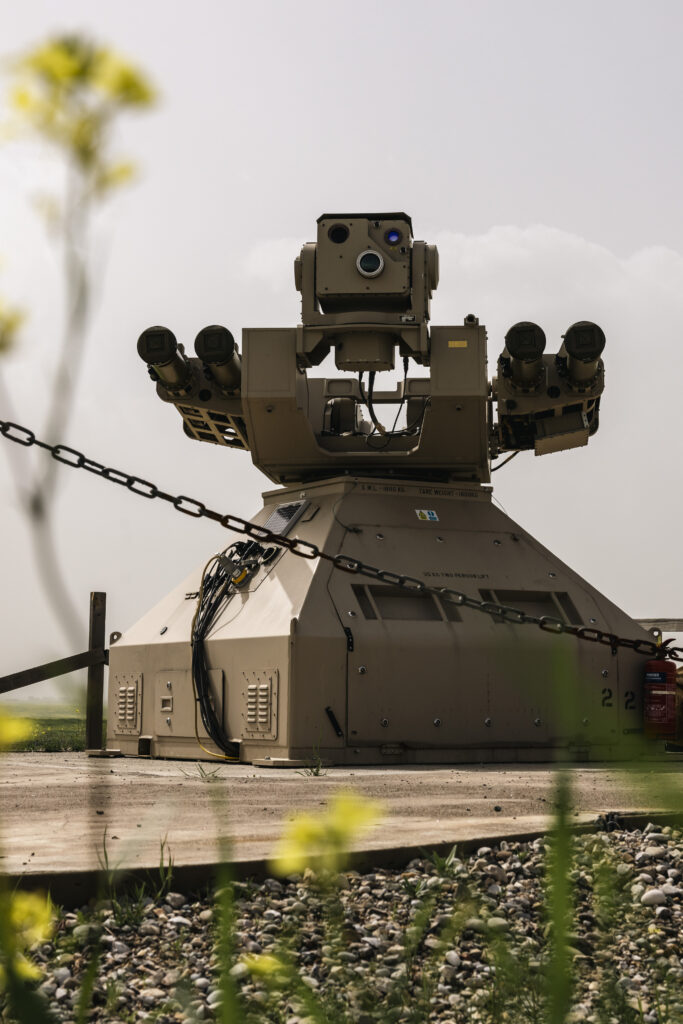
The UK Ministry of Defence (MOD) has adopted SAPIENT as its standard for counter-uncrewed aerial systems (counter-UAS) technology, and NATO is now taking it up too. According to UK MoD, the alliance will use SAPIENT as the basis of a STANdard RECommendation (STANREC) for counter-drone systems.
SAPIENT stands for Sensing for Asset Protection with Integrated Electronic Networked Technology. The MOD developed it as an open standard and architecture for networking advanced sensors and effectors. Sensors run artificial intelligence (AI) locally and pass concise track and classification data to a fusion layer. The system then allocates sensing and effect assets at machine speed.
The standard addresses fragmented ecosystems in which proprietary interfaces limit interoperability. It lets customers mix equipment from different suppliers and avoid vendor lock-in. Multi-sensor fusion also makes the shared picture more resilient to spoofing, deception and false alarms.
Developers gain a single interface in place of multiple bespoke ones. The interface control document, published as British Standards Institution (BSI) Flex 335, defines what information components exchange. It does not dictate how they work internally, so suppliers keep their proprietary algorithms and designs.
NATO’s decision follows several years of evaluation at its counter-UAS Technical Interoperability Experiment series. SAPIENT also contributed to protecting world leaders at the NATO summit in The Hague in July 2025.
The Defence Science and Technology Laboratory (Dstl) continues to run the SAPIENT Standardisation Sub-Committee, which is open to all on a voluntary, unfunded basis. Dstl has also released an open-source Test Harness for BSI Flex 335 version 2, which checks whether components comply with the standard.
Beyond counter-UAS, the standard applies to base defence, perimeter protection, border control and infrastructure protection.
Learn more on the UK MoD website