Image: British Army
British paratroopers have concluded two weeks of joint training with the Japan Ground Self-Defense Force (JGSDF), underscoring a steadily expanding defence partnership between London and Tokyo. The drills, part of Exercise Vigilant Isles 25, aimed to enhance interoperability and strengthen the countries’ ability to respond to regional security challenges, according to the UK Ministry of Defence.
A Strengthened Partnership in the Indo-Pacific
The exercise brought together A Company, 2nd Battalion The Parachute Regiment (2 PARA), and the JGSDF’s 5th Brigade at the Minami-Eniwa training area on the northern island of Hokkaido. The deployment reflects the UK’s growing engagement in the Indo-Pacific, a region London views as increasingly central to global security and economic stability.
Over the past decade, Japan has also intensified defence cooperation with like-minded partners amid rising concerns about regional tensions and the need for coordinated deterrence. The UK remains the only European nation that conducts bilateral military training on Japanese soil.
Joint Operations and First-Time Achievements
Across the two-week programme, soldiers from both countries trained side-by-side on weapons systems, fieldcraft and airborne operations. British paratroopers conducted jumps using Japanese Type 13 parachutes from a Japan Air Self-Defense Force C-130H Hercules—earning participating personnel Japanese parachute wings.
The drills culminated in a multi-domain field exercise simulating the defence of Japanese territory from an amphibious and airborne threat. Troops deployed by parachute, helicopter, vehicle and amphibious landing craft.
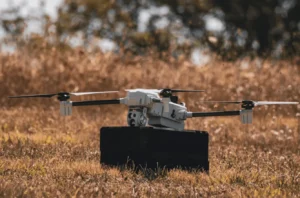
A Coy 2 PARA was supported by Puma uncrewed aircraft systems from 32nd Regiment Royal Artillery and a Light Electronic Warfare Team from 14 Signal Regiment. These intelligence, surveillance and reconnaissance (ISTAR) elements helped identify enemy positions, enabling the joint force to manoeuvre or strike with greater precision.
Major Eddie Brecht, Officer Commanding A Coy 2 PARA, said the exercise marked a significant step forward in bilateral cooperation. “Exercise Vigilant Isles is about British and Japanese soldiers training together to defend a free and open Indo-Pacific region. Working together seamlessly, we have developed our readiness for warfighting and achieved some notable firsts,” he said, according to the UK Ministry of Defence.
He added that integration with JGSDF personnel had been “remarkably rapid,” crediting the professionalism and openness of Japanese forces. Brecht also highlighted the development of a new software tool enabling British reconnaissance assets to feed targeting data to Japanese artillery quickly and with high accuracy.
Building Interoperability — and Mutual Understanding
For many personnel, the exercise offered insight not only into different military methods but also into each other’s cultures. Lance Corporal Maxwell Morley of 14 Signal Regiment said working alongside foreign counterparts “lets us see how others do the same job,” helping both sides refine tactics and improve joint operations.
Corporal Tyler Moore of 2 PARA, who trained on the Type 13 parachute system, noted that while British and Japanese airborne procedures were broadly similar, “little differences” in equipment fitting and in-air routines made the experience professionally valuable.
A Growing Defence Relationship
Vigilant Isles has now taken place four times, becoming a fixture of the UK–Japan defence calendar. The exercises form part of a wider strategic partnership that includes the Global Combat Air Programme (GCAP) and increased naval cooperation.
Major General Tomoki Kishira, commander of the JGSDF 5th Brigade, said the latest iteration would further strengthen “operational capabilities to respond to various contingencies” while deepening trust between the two forces.
As the Indo-Pacific remains a focal point of geopolitical competition, both nations view such training as critical to maintaining stability and reinforcing a shared commitment to a rules-based international order.
Source: British Army Press Release