Image: Lockheed Martin
Lockheed Martin’s Skunk Works division has demonstrated an artificial intelligence system capable of autonomously managing mission disruptions across multiple unmanned platforms, underscoring the defence industry’s push toward more resilient and distributed autonomous operations, according to a company announcement published via PRNewswire.
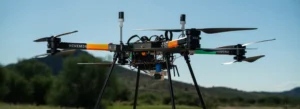
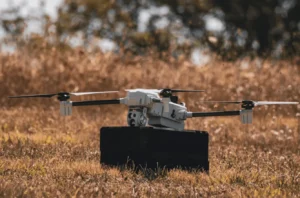
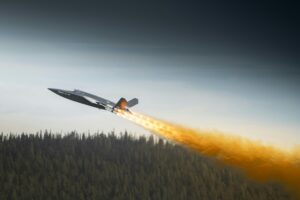
In a recent test at Fort Worth, Texas, engineers integrated an AI-driven mission contingency management tool into a Stalker XE Block 25 unmanned aerial vehicle and a modified Alta X 2.0 drone provided by Drone Amplified. The system was designed to detect unexpected mission problems—in this case, simulated fuel-related contingencies—and instantly generate new operational plans.
AI Replans Missions Within Seconds
During the demonstration, the ground command-and-control system’s AI assessed each simulated contingency within seconds, produced several re-plan options, and displayed them to the operator. Once the operator selected a preferred course of action, the AI reassigned the Stalker’s mission to the Alta X and directed the Stalker to return to base.
Lockheed Martin says this approach reduces operator workload at a time when unmanned systems are becoming more numerous and mission sets increasingly complex. By delegating contingency response to an AI agent, operators can remain focused on higher-priority tasks while ensuring continued mission execution.
“This demonstration proves AI can move from the lab to the battlefield, delivering a multitude of capabilities ranging from autonomous decision-making to rapid data flow between unmanned vehicles across air, ground and synthetic environments,” said OJ Sanchez, vice president and general manager of Skunk Works, in the release.
Multi-Domain Coordination Across Air and Ground
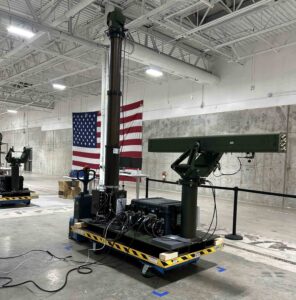
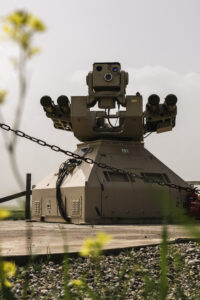
The test also linked the Stalker UAV to a unified command-and-control node that simultaneously managed an unmanned ground vehicle operating in Kansas, with additional support from Fulcrum-provided UAVs. This showed that a single mobile command node can coordinate geographically dispersed drone formations across air and ground domains.
Such distributed control is a key element of emerging U.S. defence concepts that aim to leverage networks of inexpensive unmanned platforms to improve resilience, complicate adversary targeting, and maintain operational tempo in contested environments.
Leveraging Open-Architecture AI Tools
The demonstration incorporated Lockheed Martin’s STAR.SDK, part of the company’s broader STAR.OS software ecosystem. The tool enabled the rapid integration of the contingency-management application with a user interface, including a chat-based assistant that presented re-tasking options to the operator.
According to the company, STAR.OS is designed to allow different AI models and autonomous systems to work together more easily, supporting future open-architecture goals within the U.S. Department of Defense.
Broader Push Toward Autonomy
Lockheed Martin frames the exercise as part of its ongoing effort to advance autonomous mission capabilities and enhance multi-domain integration for U.S. forces and allied militaries. The company and its competitors have increasingly focused on autonomous decision-support tools as the Pentagon seeks scalable, distributed unmanned systems for both intelligence and combat roles.
The Skunk Works demonstration adds to a growing body of industry tests aimed at proving that AI can not only assist operators but also manage unexpected mission challenges in real time—an essential step toward trusted autonomy in future air and ground operations.
Source: Lockheed Martin