Successful static fire at West Virginia facility underscores expanding role in Army’s long-range precision strike modernization
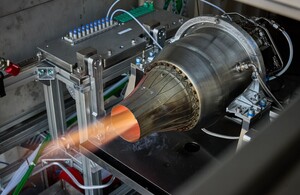
Northrop Grumman has completed its 16th consecutive successful production test of the solid rocket motor powering the U.S. Army’s Precision Strike Missile (PrSM) Increment 1, according to the company.
The static qualification test, conducted at the Naval Industrial Reserve Ordnance Plant at Allegany Ballistics Laboratory in Rocket Center, West Virginia, validated performance and reliability benchmarks for the next-generation tactical strike system.
“This string of successes reinforces the strength of our tactical propulsion portfolio,” said Erik Buice, vice president of Missile Products at Northrop Grumman. The company supplies the motor to prime contractor Lockheed Martin as part of the Army’s long-range precision fires modernization effort.
Scaling Production Amid Rising Demand
The PrSM program represents a critical capability upgrade for the Army. It provides extended-range precision strike options beyond legacy systems. Northrop Grumman has positioned itself as a key enabler of that transition.
The company designs, casts, and tests the rocket motors at modernized facilities. It leverages advances in material science and manufacturing infrastructure to meet accelerating production timelines. As the Army moves toward full-rate production, Northrop Grumman is expanding capacity across its propulsion operations.
The defence contractor employs nearly 100,000 people and operates more than 30 million square feet of manufacturing space. That footprint—equivalent to over 500 football fields—supports scaled production across multiple tactical propulsion programs.
Broader Portfolio Supports Multi-Domain Operations
While PrSM garners significant attention, it forms part of a wider tactical propulsion portfolio spanning air defense interceptors, guided munitions boosters, and integrated missile defense systems.
Teams at Allegany Ballistics Laboratory also support the Guided Multiple Launch Rocket System, which delivers medium-range precision fires. The facility contributes to the Army’s Integrated Air and Missile Defense portfolio as well.
Beyond propulsion, Northrop Grumman provides fixed ammunition, warhead components, energetics, and fuzes. This vertically integrated approach supports lifecycle management and scalability across strike and defense platforms.
“Our teams are proving that readiness isn’t a future goal; it’s a standard we meet every day,” Buice said. “Every successful test demonstrates that our propulsion is ready when the mission calls.”
Industry Context
The successful test comes as demand intensifies across the defense industrial base. Geopolitical tensions and shifting threat environments have accelerated procurement timelines for precision strike and air defense systems.
The Army awarded Lockheed Martin a contract in 2023 to transition PrSM to full-rate production. Northrop Grumman’s role as propulsion supplier positions it to benefit from expected volume increases.
The PrSM program is designed to replace the Army Tactical Missile System with a more capable, longer-range alternative. Initial operational capability was achieved in 2023. Increment 2, featuring an enhanced seeker for maritime targets, remains in development.
Northrop Grumman continues to invest in propulsion and munitions technology development. The company has signaled intentions to expand production capacity further as customer demand grows across allied nations and U.S. services.
Source: Northrop Grumman Press Release