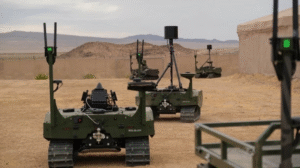
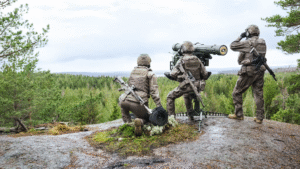
Image: UK MoD © Crown copyright 2023
The United Kingdom has accelerated £200 million in defence funding to prepare its armed forces for a potential deployment to Ukraine, while expanding air defence support against Russian attacks. The announcement signals London’s intent to play a leading role in post-war security arrangements, according to the UK government.
Defence Secretary John Healey confirmed the funding during a visit to Ukraine, stating that the money will equip British forces for possible service within the proposed Multinational Force for Ukraine (MNFU). The force would deploy only if a peace agreement is reached.
The funding follows a declaration of intent signed in Paris this week by the leaders of the UK, France, and Ukraine. The agreement confirmed that British and French troops would deploy to Ukraine as part of a multinational security presence after a ceasefire or peace deal, according to the UK Ministry of Defence.
Preparing Forces for a Post-War Mission
The £200 million allocation will be spent during the current financial year. It will fund upgrades to vehicles, communications systems, counter-drone defences, and additional force-protection equipment. The aim is to ensure UK troops can deploy rapidly if required.
The money comes from the core defence budget rather than emergency funding. UK officials say this underlines Britain’s commitment to lead the MNFU and deliver long-term security guarantees for Ukraine.
Healey described the investment as essential to national security. He said Britain must remain ready to act as the war approaches its fifth year, according to the Ministry of Defence.
The MNFU’s headquarters is already operational in Paris. Healey travelled to Ukraine alongside the most senior British general assigned to the headquarters, holding talks with President Volodymyr Zelenskyy and Defence Minister Denys Shmyhal on the force’s military planning.
Expanded Air Defence Support
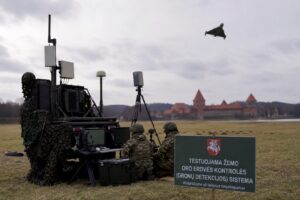
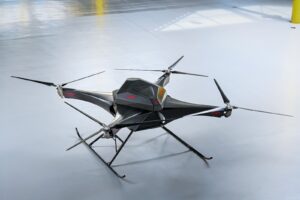
Alongside deployment preparations, the UK is accelerating air defence assistance to counter Russia’s sustained drone campaign. Healey confirmed that production of the British-built Octopus interceptor drone will begin this month.
Octopus interceptors are designed to destroy Iranian-designed Shahed drones before they strike civilian targets or critical infrastructure. Ukrainian engineers developed the original concept, with British defence firms refining it for large-scale production.
According to the UK government, the drones are inexpensive and designed for rapid manufacture. Each interceptor costs less than 10 percent of the drone it is meant to destroy, offering a cost-effective method of air defence at scale.
British industry plans to produce thousands of Octopus interceptors each month. The drones will be delivered directly to Ukraine for operational use against ongoing Russian attacks.
The design cycle updates every six weeks, using frontline battlefield data to adapt to evolving Russian tactics. This approach aims to maintain effectiveness despite rapid changes in drone technology and employment methods.
Defence Industry and Strategic Implications
The Octopus programme forms part of the UK’s broader £600 million air defence commitment to Ukraine this year. That package sits within a wider £4.5 billion military support programme for 2025, according to the Ministry of Defence.
Under the UK–Ukraine 100-Year Partnership, real-time battlefield data feeds directly into British production lines. Officials say this shortens development cycles and speeds delivery to the front line.
The government also highlights domestic benefits. The programme supports high-skilled manufacturing jobs across the UK and reinforces defence production as a driver of industrial growth and innovation.
UK officials argue the accelerated funding sends a clear signal to allies and adversaries alike. Britain intends to remain a central player in European security and Ukraine’s long-term defence, according to the Ministry of Defence.
Source: UK MoD